Air fryer poached eggs are an increasingly popular choice for home cooks who want a fast, foolproof way to prepare a classic breakfast dish. Traditional poaching on the stovetop can feel intimidating due to the delicate timing and technique required, but the air fryer simplifies the process.
By using controlled hot air circulation and small ramekins, you can create perfectly cooked eggs with minimal effort. This method is ideal for beginners and experienced cooks alike, offering a consistent way to achieve soft whites and runny yolks without constant supervision.
Why Air Fryer Recipes Are Trending for Breakfast
Air fryer recipes have surged in popularity because they combine convenience with efficiency. Many people now rely on air fryers for quick meals that require less cleanup and less hands-on cooking time. Breakfast recipes, in particular, benefit from this approach since mornings are often busy.
Air fryer poached eggs fit perfectly into this trend, as they take only a few minutes to prepare and cook. This method allows you to enjoy a nutritious, protein-rich breakfast without needing multiple pots or complicated steps.
Understanding the Basics of Poached Eggs
Poached eggs are traditionally cooked by gently simmering them in water until the whites set and the yolks remain soft. The goal is to create a smooth, tender texture without overcooking the yolk. While this sounds simple, achieving the perfect balance can be tricky.
The air fryer method recreates this gentle cooking environment using water-filled ramekins, allowing the eggs to cook evenly. This approach removes much of the guesswork, making it easier to achieve consistent results every time.
Ingredients That Make This Recipe Simple and Accessible
One of the best aspects of air fryer poached eggs is the simplicity of the ingredients. You only need a few basic items that are likely already in your kitchen. Fresh eggs are essential, as they hold their shape better during cooking and produce a more appealing final result. A light coating of oil spray ensures that the eggs do not stick to the ramekins, making them easier to remove. Salt and pepper provide a simple seasoning that enhances the natural flavor of the eggs without overpowering them.
The Importance of Using the Right Equipment
Using the proper equipment can make a significant difference in the outcome of your air fryer poached eggs. Ramekins are crucial because they hold both the egg and the water in place, creating a stable cooking environment. Choosing ramekins that are the right size ensures even cooking and prevents overflow. A small strainer is helpful for draining excess water before serving, which improves both texture and presentation. Mini oven mitts are also recommended for safely handling the hot ramekins when removing them from the air fryer.
Step-by-Step Cooking Process for Perfect Results
The cooking process begins with preheating the air fryer, which ensures that the eggs cook evenly from the start. Skipping this step can lead to uneven textures, so it is important to allow the air fryer to reach the desired temperature. After greasing the ramekins, adding room-temperature water helps mimic the traditional poaching method. Carefully cracking the eggs into the ramekins prevents breaking the yolks, which is key to achieving the desired appearance and texture. Cooking at the correct temperature allows the whites to set while keeping the yolk soft.
Achieving the Ideal Texture for Poached Eggs
The perfect poached egg has fully set whites and a slightly runny yolk that flows when cut. In the air fryer, this texture is achieved by carefully controlling the cooking time. Around five minutes is typically enough to set the egg whites, while an additional one to two minutes can firm up the yolk if desired. Gently loosening the egg from the ramekin before removing it helps maintain its shape. This step ensures that the egg looks as good as it tastes when served.
Common Challenges and How to Solve Them
Even though this method is straightforward, a few challenges can arise. For example, eggs may stick to the ramekins if they are not properly greased. Using a light coating of oil spray helps prevent this issue. Another common problem is uneven cooking, which can occur if the air fryer basket is overcrowded. Cooking only one or two eggs at a time allows for better air circulation and more consistent results. Adjusting cooking time based on your air fryer model can also help address variations in performance.
Customizing Air Fryer Poached Eggs to Your Taste
One of the advantages of this recipe is its versatility. You can easily customize air fryer poached eggs to suit your preferences by adding herbs, spices, or other toppings. For example, a sprinkle of chili flakes can add a bit of heat, while fresh herbs like parsley or chives provide a burst of freshness. These eggs can be served on toast, paired with avocado, or added to grain bowls for a more complete meal. This flexibility makes the recipe suitable for a wide range of tastes and dietary needs.
How Air Fryer Size and Model Affect Cooking
Different air fryer models can produce slightly different results, so it is important to understand how your specific appliance works. Factors such as basket size, wattage, and airflow design can all influence cooking time. Larger air fryers may require slight adjustments to ensure even cooking, while smaller models may cook more quickly. Eggs that are taken directly from the refrigerator may also need a bit more time compared to those at room temperature. Testing the recipe with a small batch can help you find the perfect timing for your setup.
Do You Need Vinegar or Special Techniques?
Traditional poached egg recipes often recommend adding vinegar to the water to help the egg whites set more quickly. However, this step is not necessary when using an air fryer. The ramekin method provides enough structure to keep the egg intact during cooking. Similarly, while some recipes suggest using hot water, room-temperature water works just as well and simplifies the process. These adjustments make the recipe more approachable, especially for beginners who may be unfamiliar with classic poaching techniques.
Serving Ideas for a Balanced and Delicious Meal
Air fryer poached eggs can be enjoyed in many different ways, making them a versatile addition to your meal planning. They are perfect for serving on toasted bread or English muffins, creating a classic breakfast option. Adding them to salads or grain bowls introduces a rich, creamy element that enhances the overall dish. The runny yolk acts as a natural sauce, bringing together flavors and textures. Whether served alone or as part of a larger meal, these eggs provide both nutrition and satisfaction.
Helpful Notes for Consistent Results
When preparing air fryer poached eggs, a few simple tips can help ensure success. Always preheat the air fryer to create a stable cooking environment. Use ramekins that are appropriately sized for the eggs and water to avoid overflow. Avoid overcrowding the basket, as this can lead to uneven cooking. It is also helpful to experiment with cooking times to match your preferred yolk consistency. Starting with one or two eggs allows you to adjust the process before making larger batches.
Understanding the Role of Timing and Temperature
Timing and temperature are critical factors in achieving perfect air fryer poached eggs. Cooking at a slightly lower temperature after preheating allows the eggs to cook gently, which helps maintain their delicate texture. Monitoring the cooking time closely ensures that the whites set properly without overcooking the yolk. Small adjustments can make a big difference, so it is worth taking the time to find the ideal settings for your air fryer. This attention to detail leads to consistently excellent results.
Why This Method Is Ideal for Beginners
For those new to cooking, air fryer poached eggs provide an excellent starting point. The process is straightforward, requires minimal ingredients, and does not involve complicated techniques. Unlike traditional poaching, there is no need to manage boiling water or worry about eggs breaking apart. The step-by-step approach makes it easy to follow, while the predictable results help build confidence in the kitchen. This method allows anyone to create a professional-looking dish with ease.
Air fryer poached eggs offer a modern, convenient way to enjoy a timeless breakfast favorite. By simplifying the cooking process and reducing the need for specialized techniques, this method makes poached eggs accessible to everyone. With just a few ingredients and a short cooking time, you can create a delicious and nutritious meal that fits into any schedule. Whether you are preparing a quick breakfast or an elegant brunch, this recipe delivers reliable results that are both satisfying and easy to achieve.
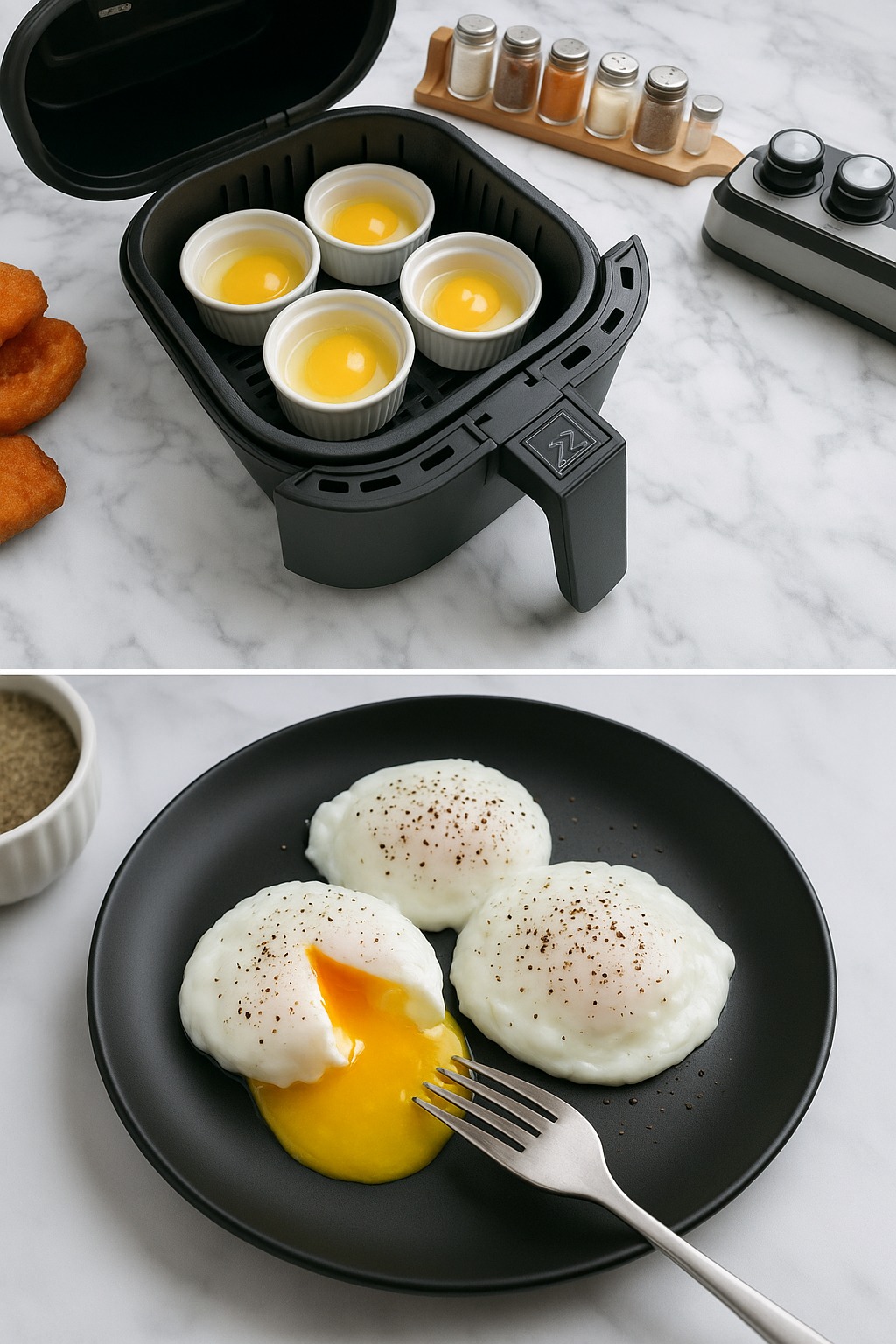
Air Fryer POACHED EGG
A quick and easy method for making perfectly poached eggs using an air fryer. This simple recipe delivers soft whites and runny yolks in just minutes, making it ideal for a healthy breakfast or brunch.
2
servings5
minutes6
minutes101
kcal11
minutesIngredients
Cooking spray (olive oil spray or avocado oil spray) for greasing
2 large eggs
Salt, as needed
Black pepper, as desired
Directions
- Preheat the air fryer to 400°F (204°C) and allow it to heat for about 5 minutes.
- Lightly coat the inside of each ramekin with oil spray to prevent sticking.
- Pour about ¼ cup of room-temperature water into each ramekin.
- Crack one egg into each ramekin, keeping the yolk intact.
- Carefully place the ramekins into the air fryer basket.
- Cook at 360°F (182°C) for 5 minutes.
- Use a small spoon to gently loosen the edges of the egg from the ramekin.
- Continue cooking for an additional 1–2 minutes, depending on your preferred yolk firmness.
- Carefully remove the ramekins using oven mitts and slide each egg into a strainer to remove excess water.
- Season with salt and pepper before serving.
Nutrition Facts
- Calories: 101kcal
- Fat: 8g
- Carbohydrates: 1g
- Sugar: 0.2g
- Protein: 6g
- Calcium: 28mg


Pingback: Big Mac Cheeseburger Protein Bowl - Snacks.CookingPoint