Air Fryer Egg Toast is a simple breakfast made with crisp bread and an egg cooked right in the center. It is similar to the classic Egg in a Hole or Egg in a Basket, but using an air fryer makes the process easy and convenient.
The bread becomes toasted around the edges while the egg cooks in the middle. With only a few basic ingredients and about eight minutes of cooking time, this recipe is a useful choice for busy mornings.
Why Make Egg Toast in an Air Fryer
Cooking egg toast in an air fryer means the bread and egg can cook at the same time. You do not need to toast the bread separately or heat a frying pan for the egg. Once the bread is prepared and the egg is added, the air fryer does the cooking.
This also means less time standing at the stove. The finished toast has crisp edges, a warm egg, and a texture that can be changed simply by adjusting the cooking time.
What Is Egg in a Hole
Egg in a Hole is a traditional breakfast where an egg is cooked inside a piece of bread. The center of the bread is opened or pressed down to create space for the egg. This Air Fryer Egg Toast follows the same basic idea without requiring a skillet. The method is especially simple because the egg goes directly into the bread before cooking. It is an easy way to combine two breakfast favorites into one quick meal.
Ingredients for Air Fryer Egg Toast
The ingredient list is short, which makes this an easy breakfast recipe to prepare. You need one large egg, one large slice of bread, salt, and black pepper. Cheese is optional if you want a cheesy egg toast. Cooking spray is also used to prepare the air fryer basket and help prevent the bread from sticking. There is no need for a separate egg mixture, complicated seasoning, or additional cooking steps.
Choosing the Right Egg
A large egg works well for this recipe because it provides enough egg to fill the center of a large slice of bread. Crack the egg directly into the indentation rather than cooking it separately. Try to place it near the middle, but do not worry if some of the egg white spreads onto the surrounding bread. The white may move slightly before it sets, and this is completely normal. The egg will still cook properly during air frying.
Choosing Bread for Egg Toast
A large slice of bread is the best choice because it provides enough space for the egg and leaves a good border around it. Brownberry and Dave’s Killer Bread are examples of breads that can work well for this recipe. The specific brand is less important than the size and shape of the slice. A sturdy slice is also easier to handle when creating the center indentation and transferring the finished toast from the air fryer.
Salt and Black Pepper
Salt and black pepper are enough to season the egg for the basic version of this recipe. Sprinkle them directly over the egg after it has been cracked into the center. This keeps the seasoning focused on the egg while allowing the toasted bread to retain its natural flavor. You can use as much or as little seasoning as you prefer. Since the ingredient list is simple, even a small amount of salt and pepper can make a noticeable difference.
Optional Cheese
Cheese is optional, so you can make this recipe without it. If you want a cheesy breakfast, add a small amount of cheese during the final minute of air frying. Adding cheese near the end allows it to melt without keeping the toast in the air fryer for much longer. This is useful because additional cooking can make the bread darker. A plain version with salt and pepper is simple, while cheese adds a richer texture and flavor.
Preparing the Air Fryer Basket
Start by spraying the air fryer basket lightly with cooking spray. This helps reduce the chance of the bread sticking to the surface and makes the finished toast easier to remove. Place the bread directly into the basket and make sure it lies flat. A flat slice gives the egg a stable place to sit while cooking. Avoid moving the bread around after the egg has been added because the uncooked egg can spread before it begins to set.
Making the Center Indentation
Use a drinking glass to press an indentation into the middle of the bread. You do not necessarily need to cut completely through the slice. The purpose is to create a shallow space where the egg can sit. After pressing the glass into the bread, use your fingers to gently push the center down a little farther. This gives the egg more room and helps keep it from spreading across the entire slice during the first part of cooking.
Adding the Egg
Once the center of the bread has been prepared, crack one large egg directly into the indentation. Try to keep the yolk close to the middle, but there is no need for perfect placement. Some of the egg white may extend beyond the indentation, and that is fine. As the egg cooks, the white will become firm. Sprinkle salt and black pepper over the egg before placing the bread into the air fryer. No separate egg preparation is required.
Air Fryer Temperature
Cook the egg toast at 340°F for about eight minutes. This temperature and cooking time provide a useful starting point for an egg with cooked whites and a soft yolk. The bread should become crisp and lightly browned around the edges. Air fryer models can vary, so the exact result may be different depending on the appliance you use. After making the recipe once, you can adjust the cooking time to match your preferred egg texture.
How Long to Cook Egg Toast
Cooking time is the easiest way to change the texture of the egg. For a softer result, cook the toast for about seven minutes. Eight minutes is a good starting point for a runny yolk with set whites. If you prefer a firmer yolk, cook it for about nine minutes. For a well-cooked yolk and firm whites, ten minutes may be better. Keep in mind that longer cooking will also make the bread darker and crispier.
For a Runny Egg Yolk
If you enjoy a soft, runny yolk, start with eight minutes at 340°F. Depending on your air fryer, seven minutes may produce an even softer center. When the toast is ready, carefully cut into the yolk and allow it to spread across the crisp bread. The combination of toasted bread and warm yolk is one of the main reasons this easy breakfast recipe is so enjoyable. Adjust the time slightly after your first batch if needed.
For a Firmer Egg Yolk
If you prefer your eggs more firmly cooked, increase the cooking time to nine or ten minutes. The additional heat gives the yolk and whites more time to set. However, the bread will also continue browning during those extra minutes. If you want a firmer egg without making the toast too dark, reduce the air fryer temperature to 330°F when cooking for longer. Check the toast near the end because every air fryer can produce slightly different results.
Adding Cheese to the Toast
For a cheesy Air Fryer Egg Toast, wait until the final minute before adding the cheese. Sprinkle a small amount over the egg and return the toast to the air fryer. The heat will melt the cheese over the top while the egg finishes cooking. This method prevents the cheese from spending too much time under the hot air. It also reduces the chance of the cheese becoming overly browned before the egg reaches your preferred level of doneness.
Why the Recipe Is Convenient
This recipe is useful when you want a quick breakfast without preparing several separate components. The bread, egg, and seasoning are handled together, and the air fryer takes care of the cooking. There is no need to stand over a skillet or flip the egg. Preparation takes only a couple of minutes, followed by the cooking time. That makes Air Fryer Egg Toast a practical option for weekday mornings when you want a warm breakfast without a long preparation process.
Less Cleanup After Breakfast
Another benefit is the limited cleanup. Traditional egg and toast may involve a skillet, toaster, spatula, and other kitchen items. With this recipe, the air fryer is the main cooking appliance. Once the toast is removed, there is usually very little to clean apart from the basket and the utensil used during preparation. Using cooking spray also helps make removal easier. The simple process makes this recipe suitable for anyone who wants a breakfast that does not leave a pile of dishes.
How to Keep the Toast Crisp
Serve the egg toast as soon as it comes out of the air fryer. Freshly cooked bread has the best crisp texture, while the warm egg provides a soft center. If you allow the toast to sit for a long time, moisture from the egg can gradually soften the bread. This is especially noticeable when the yolk is runny. Use a spatula to carefully lift the toast from the basket and transfer it directly to a plate.
Do Not Worry About the Shape
The indentation does not have to be perfectly round. A drinking glass provides an easy way to press down the center, but the finished shape may vary slightly. The egg white can also spread beyond the indentation while cooking. These small differences do not affect the basic recipe. The most important thing is creating enough space for the egg while leaving enough bread around the outside. Homemade egg toast does not need to look perfectly shaped to taste good.
Air Fryer Cooking Can Vary
Different air fryers can cook food at slightly different speeds. Some models may brown the bread faster, while others may require more time for the egg to reach the desired texture. For that reason, use eight minutes as a starting point rather than an exact rule for every appliance. Pay attention to the first batch and make a small adjustment if necessary. Once you learn how your air fryer cooks bread and eggs, the recipe becomes very easy to repeat.
Making a Quick Weekday Breakfast
Air Fryer Egg Toast fits well into a busy morning routine. The preparation is short, and the air fryer handles the cooking without requiring constant attention. While the toast cooks, you can prepare coffee, fruit, or another simple breakfast item. The recipe is also easy to remember after making it once. Prepare the bread, press the center, add the egg, season it, and cook. This simple sequence makes it a useful recipe for regular breakfast planning.
Serving Air Fryer Egg Toast
This breakfast is best served immediately after cooking. The crisp bread and warm egg provide the best texture when eaten fresh. For the basic version, salt and black pepper are enough. If you enjoy cheese, add it during the final minute of cooking. The soft yolk can spread over the toast when cut, creating a rich topping without needing sauce or other ingredients. Because the recipe combines bread and egg, it can be served on its own.
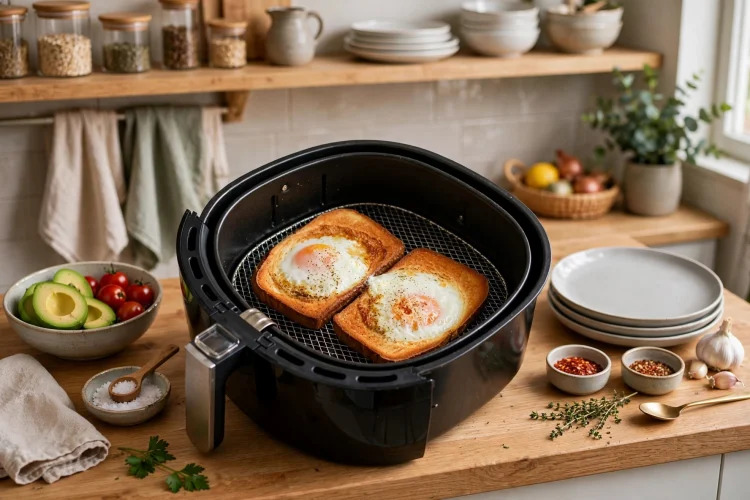
Air Fryer Egg Toast
 Recipe by admin1
Air Fryer Egg Toast is a quick and easy breakfast made with crispy toasted bread, a perfectly cooked egg, and simple seasonings.
2
servings2
minutes8
minutes165
kcal10
minutesIngredients
2 large eggs
2 slices of bread
Salt, to taste
Pepper, to taste
Optional cheese, for topping
Cooking spray
Directions
- Spray the air fryer basket with cooking spray and place the bread slices inside.
- Use a glass to make an indentation in the center of each slice. Press the center down gently with your fingers.
- Crack one egg into the center of each indentation. It is okay if some of the egg white spreads beyond the indentation.
- Season the eggs with salt and pepper.
- Air fry at 340°F for 8 minutes.
- For cheesy egg toast, sprinkle a small amount of cheese over the toast during the final minute of cooking.
- Carefully remove the toast with a spatula and serve immediately.
- 7 minutes: Runny yolk and slightly runny whites.
- 8 minutes: Runny yolk with set whites.
- 10 minutes: Well-cooked yolk and firm whites.
Notes
- Bread may become darker when cooked longer than 8 minutes
- For longer cooking times, use 330°F to help prevent the toast from becoming too dark.
- Some egg white may spread beyond the indentation; this is completely fine.
- Add optional cheese during the final minute of cooking.
Nutrition Facts
- Total number of serves: 2
- Calories: 165kcal
- Fat: 7g
- Saturated Fat: 2g
- Carbohydrates: 15g
- Fiber: 2g
- Sugar: 2g


Very tastes great
Brilliant thanks for the heads up for all menses xxx