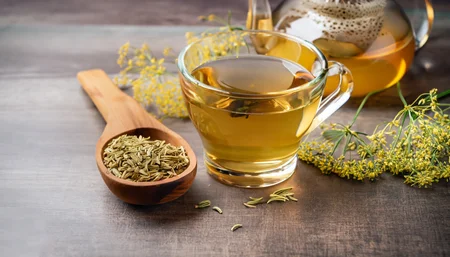
Fennel tea is one of the most commonly used herbal teas for digestive discomfort, bloating, gas, and stomach heaviness. Some people with digestive conditions, including diverticular disease, prefer mild fennel tea because it is naturally caffeine-free and generally gentle on the stomach when consumed in moderation. Fennel has traditionally been used to support digestion and reduce feelings of fullness and bloating.
Important:
- This tea is not a treatment for diverticulitis.
- During severe flare-ups, follow your doctor’s dietary guidance.
- Herbal teas may affect individuals differently.
- If symptoms worsen, stop using the tea and consult a healthcare professional.
What Fennel Tea Tastes Like
Fennel tea has:
- Mild sweetness
- Soft herbal flavor
- Light licorice or anise notes
- Warm soothing aroma
The flavor becomes stronger the longer the seeds steep.
Why People Use Fennel Tea for Digestion
Fennel seeds contain aromatic compounds traditionally associated with digestive support. Many herbal tea blends use fennel for bloating, stomach heaviness, and digestive discomfort.
Some people report that fennel tea feels soothing after meals or during bloating episodes. Community discussions online frequently describe fennel tea as calming for the digestive system.
Long Detailed Fennel Tea Recipe
Yield
- 2 cups
Ingredients
- 2 cups water
- 1 tablespoon fennel seeds
- 3 thin slices fresh ginger (optional)
- 1 teaspoon honey (optional)
- Small chamomile tea bag (optional)
- Tiny pinch turmeric (optional)
Equipment Needed
- Small saucepan
- Tea strainer
- Spoon
- Mug or teapot
- Mortar and pestle or rolling pin
Step 1: Prepare the Fennel Seeds
Measure the fennel seeds carefully.
Lightly crush them using:
- Mortar and pestle
OR - Back of a spoon
OR - Rolling pin
Do not grind into powder.
Light crushing helps release:
- Natural oils
- Aroma
- Flavor compounds
This creates a more flavorful and effective infusion.
Step 2: Heat the Water
Pour water into a saucepan.
Bring to a gentle simmer.
Avoid aggressive boiling because prolonged high heat may create bitterness.
Gentle simmering is ideal for herbal infusions.
Step 3: Simmer the Seeds
Add crushed fennel seeds to the hot water.
Simmer gently for:
- 8–10 minutes
During simmering, the water gradually becomes:
- Pale golden
- Light amber
- Slightly aromatic
Longer simmering creates stronger flavor.
For sensitive stomachs, shorter brewing may feel gentler.
Step 4: Add Ginger (Optional)
If desired, add fresh ginger slices.
Simmer additional:
- 2–3 minutes
Ginger may provide warmth and digestive comfort for some people. (Verywell Health)
However, during active irritation or severe flare-ups, mild tea without ginger may be easier to tolerate.
Step 5: Steep
Turn off heat.
Cover saucepan with lid.
Let steep:
- 5 minutes
Covering helps preserve aromatic oils and natural flavor.
Step 6: Strain the Tea
Strain carefully into mugs.
The finished tea should appear:
- Clear
- Warm amber
- Golden-yellow
The aroma should feel:
- Herbal
- Slightly sweet
- Warm
Step 7: Add Optional Honey
If tolerated:
- Add small amount honey
Avoid excessive sugar.
Some people with digestive sensitivity tolerate lightly sweetened tea better than heavily sweetened drinks.
Best Time to Drink
Many people prefer fennel tea:
- After meals
- During bloating
- In the evening
- During mild digestive discomfort
Warm tea is often easier on digestion than iced beverages.
Optional Variations
Chamomile Fennel Tea
Add:
- 1 chamomile tea bag
Chamomile creates:
- Softer floral flavor
- More relaxing effect
Chamomile is commonly used in calming digestive tea blends. (Melez Tea)
Ginger Fennel Tea
Add:
- Extra ginger slices
This creates:
- Warmer flavor
- Stronger digestive tea
Mint Fennel Tea
Add:
- Few mint leaves
Mint may help some people with bloating and gas.
Avoid if mint worsens reflux symptoms.
During Diverticulitis Flare-Ups
During active flare-ups, doctors may temporarily recommend:
- Clear liquids
- Low-fiber foods
- Gentle hydration
Plain mild herbal tea may sometimes fit into this approach depending on medical advice. Always follow your healthcare provider’s recommendations first.
Storage Instructions
Refrigerate leftover tea for:
- Up to 24 hours
Reheat gently.
Do not repeatedly boil.
Common Mistakes
Making the Tea Too Strong
Excessively concentrated herbal tea may irritate sensitive stomachs.
Use moderate amounts.
Drinking Extremely Hot Tea
Very hot beverages may feel harsh on sensitive digestion.
Warm is usually better.
Adding Too Many Ingredients
Complex herbal mixtures may become difficult for sensitive digestive systems.
Simple tea is often gentler.
Final Notes
Fennel tea is widely used as a traditional herbal drink for digestive comfort, bloating, and stomach heaviness. It is naturally caffeine-free, simple to prepare, and has a mild soothing flavor. (Traditional Medicinals)
For people with diverticular disease, mild herbal teas may sometimes feel comforting alongside proper hydration and medically recommended nutrition. However, severe symptoms such as:
- Fever
- Intense abdominal pain
- Vomiting
- Bleeding
require professional medical care.


