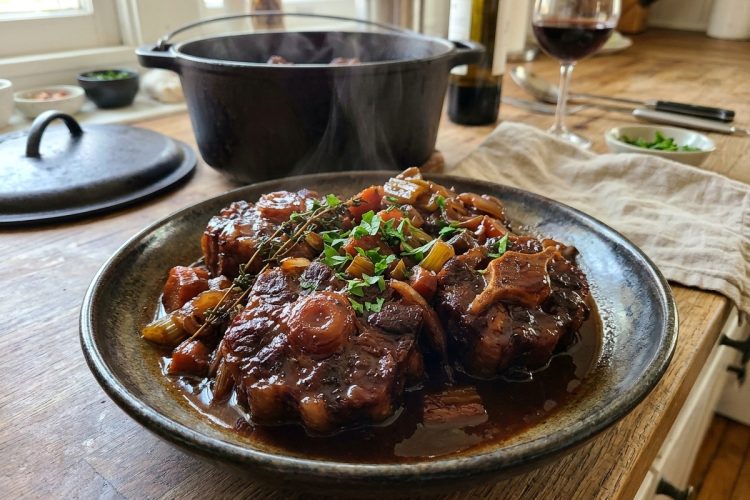
Slow braised oxtail in red wine is a rich, comforting meal made with tender beef oxtail, aromatic herbs, and a deeply flavoured wine sauce. The meat cooks slowly until it becomes incredibly soft and separates easily from the bone. As the ingredients simmer together, the sauce develops a wonderful combination of savoury, slightly sweet, and aromatic flavours. This traditional-style braised oxtail is an excellent choice for a cosy family dinner, a special weekend meal, or any occasion when you want to prepare something satisfying and full of flavour.
One of the best things about this red wine braised oxtail recipe is the way simple ingredients create such a complex finished dish. Rosemary provides an earthy herbal character, while bay leaves contribute a gentle savoury aroma. Orange peel adds a fresh citrus note that balances the richness of the meat, and anchovies bring an extra layer of savoury depth without making the sauce taste fishy. Red wine ties everything together, producing a dark, concentrated sauce that tastes wonderful with mashed potatoes, gnocchi, or crusty bread.
What Makes Red Wine Braised Oxtail Special?
Oxtail is a flavourful cut of beef that contains meat, connective tissue, and bone. Unlike quick-cooking cuts, it benefits from extended cooking at a low temperature. During this process, the connective tissue gradually softens, creating meat that becomes tender and succulent. The bones also contribute richness to the cooking liquid, helping develop a naturally full-bodied sauce. This is why slow braising is such a suitable cooking method for oxtail and why patience makes such a noticeable difference.
The red wine is another important part of the recipe. Instead of simply adding wine to the cooking pot and immediately covering everything with stock, the wine mixture is reduced first. This step concentrates its flavour and gives the finished sauce a more developed taste. As the liquid slowly cooks with the meat, vegetables, and herbs, the different flavours blend into a balanced sauce that complements the richness of the oxtail.
Another detail that makes this recipe different is the combination of anchovies, star anise, and fresh orange peel. These ingredients may seem unusual in a traditional beef dish, but each has a useful purpose. Anchovies provide umami, star anise contributes a gentle aromatic quality, and orange peel introduces freshness. Together, they prevent the sauce from tasting too heavy while adding character to every spoonful.
Why Slow Cooking Is Ideal for Oxtail
Slow cooking gives oxtail enough time to become tender without drying out. Because this cut contains plenty of connective tissue, cooking it quickly at a high temperature generally does not produce the same soft texture. Gentle heat allows the tougher parts of the meat to break down gradually, resulting in a satisfying consistency that is easy to pull away from the bone.
The oven method is particularly convenient when preparing this recipe for a weekend meal. Once the meat has been browned and the sauce prepared, the covered cooking pot can be transferred to the oven. The heat remains relatively consistent, allowing the oxtail to cook gently while the sauce develops. You do not need to stand beside the stove constantly, making this approach suitable for relaxed home cooking.
A pressure cooker offers another option when you want to enjoy braised oxtail without spending as much time cooking. It uses pressure to speed up the tenderising process while allowing the meat to absorb the surrounding flavours. Although the cooking method is different, the same flavour-building preparation remains important. Browning the meat, reducing the wine, and including the herbs and aromatic ingredients all help create a delicious result.
How to Prepare Slow Braised Oxtail in Red Wine
Prepare and Lightly Flour the Oxtail
Begin by preparing the oxtail pieces for browning. A light coating of flour helps create a better surface when the meat is cooked in the pan. It also contributes a little extra body to the sauce as the dish braises. The coating should be thin rather than heavy, allowing the natural flavour of the beef to remain the main focus.
Brown the Meat Properly
Browning is one of the most important stages of making delicious braised oxtail. Place the prepared meat in a suitable hot cooking pot and brown the pieces until they develop a deep golden-brown colour on the outside. Work in batches if necessary rather than overcrowding the pot. When too many pieces are added together, the meat can release moisture and steam instead of developing the colour needed for a flavourful braise.
Allowing enough time for this step makes a real difference to the finished dish. The browned surfaces create concentrated savoury flavours that become part of the sauce later. Make sure the different sides of the oxtail receive attention, as even browning helps produce a more developed result. Although this stage requires some extra effort, it is worth doing carefully rather than rushing ahead.
Build the Aromatic Wine Sauce
After browning the meat, prepare the flavour base using the recipe’s aromatic ingredients. Rosemary, bay leaves, anchovies, star anise, and orange peel provide the distinctive character of this dish. As these ingredients cook together, they release their aromas and contribute different flavour notes. The anchovies gradually blend into the mixture, while the herbs and citrus create a fragrant base for the beef.
Add the red wine and allow the mixture to reduce before introducing the stock. This is an important step because reducing the wine concentrates its flavour and prevents the finished sauce from becoming thin or diluted. Give the liquid sufficient time to develop a richer character. The result should be a more concentrated cooking base that complements the oxtail during the long braising process.
Combine the Meat and Cooking Liquid
Return the browned oxtail to the cooking pot and combine it with the prepared wine mixture and the remaining recipe ingredients. The liquid should surround the meat sufficiently to allow it to braise gently. Once everything is combined, cover the pot securely and prepare it for the selected cooking method. Keeping the pot covered helps retain moisture and creates the conditions needed for tender, slow-cooked beef.
Oven Method for Tender Braised Oxtail
The oven method is an excellent choice when you have enough time for a relaxed cooking session. After preparing the meat and sauce, place the covered pot in a preheated oven and allow the oxtail to cook slowly. The steady heat encourages the connective tissue to soften gradually, while the wine, herbs, and other ingredients continue developing their flavour throughout the cooking process.
During braising, the cooking liquid gradually becomes more integrated with the meat. The oxtail should eventually become very tender, with the meat separating easily from the bones. Avoid repeatedly removing the lid because doing so releases heat and moisture from the pot. Instead, allow the cooking process to continue and check the tenderness when the expected cooking time is approaching.
The oven approach is especially useful when preparing food for guests because most of the cooking happens without constant attention. You can prepare side dishes, set the table, or work on other parts of the meal while the oxtail slowly cooks. Once ready, the meat can be served directly from the cooking pot or transferred to a serving dish with plenty of sauce.
Pressure Cooker Method
If you are short on time, a pressure cooker provides a practical alternative to traditional oven braising. It creates a sealed cooking environment where pressure increases the temperature of the cooking liquid, helping tenderise the oxtail more quickly. The meat still benefits from proper preparation, so do not skip the browning stage simply because you are using a faster cooking method.
Prepare the wine mixture in the same way, allowing it to reduce before adding the stock. Transfer the ingredients to the pressure cooker according to the manufacturer’s instructions, making sure not to exceed its maximum filling level. Secure the lid and follow the appropriate pressure-cooking settings for the quantity and size of the oxtail pieces.
Once the cooking cycle has finished, allow the pressure to release safely according to the manufacturer’s guidance. Check the meat for tenderness before serving. If it needs additional cooking, continue until it reaches the desired texture. The pressure cooker is a useful option for busy days when you want the comforting flavour of braised oxtail without committing to several hours of oven cooking.
How to Get a Rich and Smooth Sauce
A good braised oxtail sauce should have a concentrated flavour and enough body to coat the meat and accompanying side dishes. One of the easiest ways to achieve this is to reduce the wine before adding stock, as this prevents the sauce from becoming unnecessarily watery. The flour coating on the oxtail also contributes some thickness as the meat cooks.
For an especially smooth finish, you can strain the sauce after the oxtail has become tender. Carefully remove the meat and vegetables, then pass the cooking liquid through a strainer to remove the solid pieces of herbs and other ingredients. Return the strained sauce to the pot and reduce it slightly if needed. This optional step creates a more refined presentation while keeping the rich flavour developed during braising.
If you prefer a more rustic appearance, simply leave the sauce as it is. The herbs and other ingredients can remain in the cooking liquid, giving the dish a homemade character. Both approaches work well, so the choice depends on whether you prefer a smooth sauce or a more traditional, hearty presentation.
Helpful Tips for the Best Results
Do Not Rush the Browning Stage
Good browning creates the foundation of the finished flavour. Give the oxtail enough space in the pan and allow each piece to develop a deep colour before turning it. If the cooking pot becomes overcrowded, the meat may release moisture and cook unevenly. Working in smaller batches is a better approach and helps achieve the flavour needed for a deeply satisfying red wine sauce.
Keep the Anchovies in the Recipe
Although anchovies might seem unexpected in a beef recipe, they are useful for building savoury depth. They dissolve into the sauce during cooking, making their presence difficult to identify in the finished dish. If you are not familiar with using anchovies in slow-cooked meals, there is no need to worry about a strong fish flavour. Their role is to enhance the overall taste.
Use Fresh Orange Peel
Fresh orange zest or peel provides a subtle citrus note that balances the rich beef and red wine. This small ingredient makes the sauce feel more rounded and prevents the different savoury flavours from becoming overwhelming. Use it as directed in the recipe rather than adding too much, as the intention is to provide gentle freshness instead of a strong orange taste.
Allow Enough Time for Braising
Tender oxtail requires patience, particularly when using the traditional oven method. Cooking at a gentle temperature gives the meat enough time to soften and allows the flavours to develop naturally. Avoid trying to speed up the oven process by increasing the temperature unnecessarily. The finished texture should be soft and succulent, with meat that pulls away from the bones easily.
Make-Ahead and Storage Advice
Slow braised oxtail is a particularly convenient meal to prepare ahead because its flavour can become even better after resting overnight. Once cooked, allow the dish to cool appropriately before transferring it to a suitable airtight container. Refrigerate it promptly and keep it chilled until you are ready to serve. Preparing the dish a day earlier can make mealtime easier, especially when cooking for family or guests.
When reheating, use gentle heat on the stovetop or in the oven. Warm the oxtail gradually, allowing the sauce to heat evenly without boiling aggressively. If the sauce has thickened during refrigeration, stir gently and adjust its consistency as needed. Make sure the meat is thoroughly reheated before serving, following safe food-storage practices.
Preparing this recipe ahead also gives you more flexibility when planning a special meal. You can focus on the side dishes and other preparations on the day of serving rather than spending the entire afternoon cooking the main course. This makes slow braised oxtail a practical choice for entertaining as well as an enjoyable weekend family dinner.
Frequently Asked Questions
Can I Prepare Braised Oxtail a Day in Advance?
Yes, this recipe is suitable for making ahead. The flavours have time to settle as the dish rests, and the sauce can develop an even more integrated taste. Refrigerate the cooked oxtail properly and reheat it gently on the stovetop or in the oven before serving. This approach is especially useful when preparing a meal for guests.
Which Red Wine Is Best for Braised Oxtail?
A dry red wine is a good choice because it provides acidity and depth without adding excessive sweetness. You do not need a particularly expensive bottle, but choose something of reasonable quality that you would enjoy drinking. The wine becomes concentrated during cooking, so its flavour contributes significantly to the finished sauce.
Can I Cook Oxtail on the Stovetop?
Yes, stovetop braising is another suitable method. Keep the pot covered and maintain a gentle simmer for approximately four hours, or until the meat becomes tender. Check the liquid occasionally and adjust the heat if necessary. The cooking process should remain gentle rather than boiling vigorously, allowing the oxtail to soften gradually.
Can I Leave Out the Anchovies?
You can leave out the anchovies if you prefer, but the finished sauce will lose some of its savoury depth. They melt into the cooking liquid during braising, so they do not create an obvious fish flavour. If you want to maintain a similar umami character, a small amount of fish sauce can be used instead.
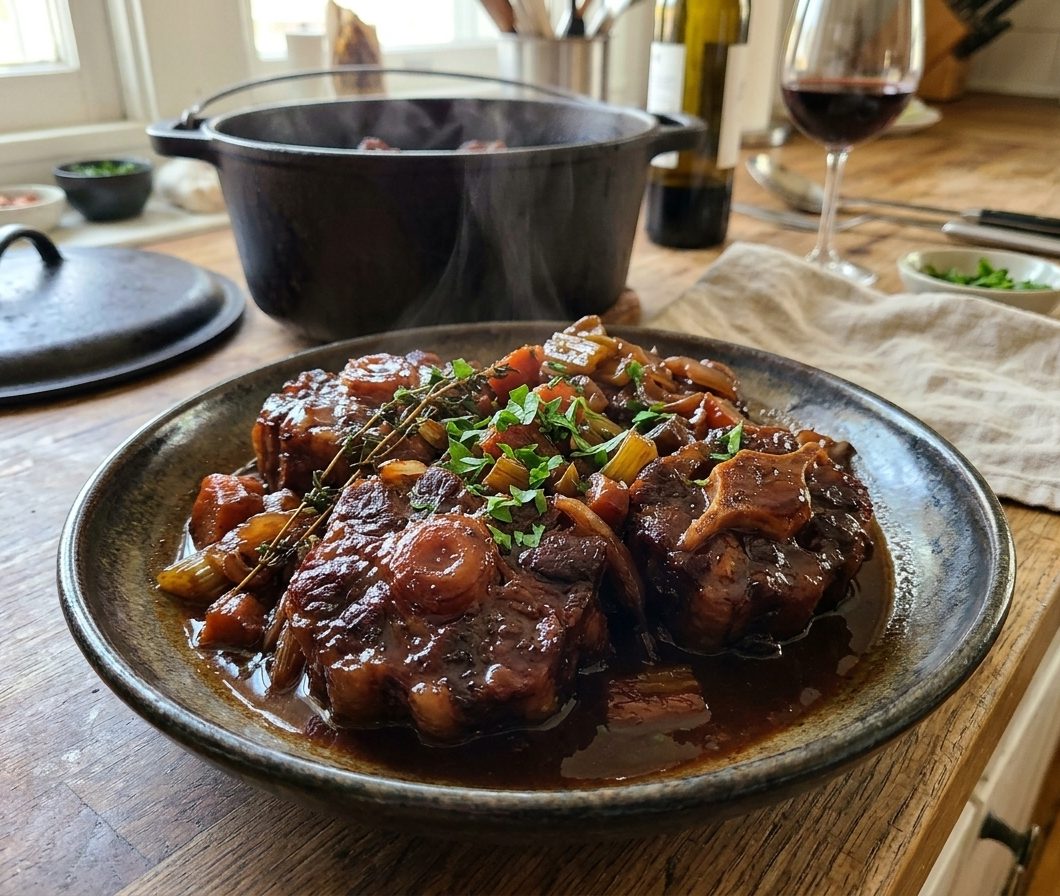
Healthy Slow Braised Oxtail in Red Wine
A rich and hearty slow-cooked oxtail recipe featuring tender, fall-off-the-bone meat simmered in a deeply flavorful red wine sauce with herbs, vegetables, and aromatic spices.
6
servings30
minutes4
hours30
minutes5
hoursIngredients
Oxtail pieces (2.5 kg)
Plain flour (1/3 cup, for coating)
Olive oil (a few generous splashes for frying)
Celery stalks (2, chopped)
Onions (2, chopped)
Carrots (3 medium, peeled and chopped)
Star anise (2 pods)
Garlic cloves (6, crushed)
Anchovy fillets (6)
Canned chopped tomatoes (400 g)Tomato paste (4 tablespoons)
Red wine (1 full bottle, dry variety)
Red wine vinegar (3 tablespoons)
Muscovado or brown sugar (3 tablespoons)
Worcestershire sauce (2 tablespoons)
Fresh rosemary (1 tablespoon, finely chopped)
Orange zest (2–3 thick strips)
Beef stock (700 ml)
Fresh parsley (finely chopped, optional for garnish)
Salt and black pepper (to taste)
Directions
- Season the oxtail pieces with salt and pepper. Lightly coat them with flour by sprinkling evenly over all sides.
- Heat olive oil in a large pan over medium-high heat. Brown the oxtail in batches until well caramelized, then set aside along with any juices.
- In the same pan, add more olive oil if needed. Cook the celery, onions, carrots, and star anise until softened.
- Add crushed garlic and anchovies, stirring until fragrant. Mix in the tomato paste and cook briefly.
- Transfer the vegetable mixture to a large casserole dish or pressure cooker.
- Pour in chopped tomatoes, red wine, red wine vinegar, sugar, and Worcestershire sauce. Allow the mixture to simmer and reduce by about half.
- Add rosemary, orange zest, and beef stock. Return the browned oxtail and juices to the pot.
- For oven cooking: Cover and cook at 170°C for 4½ to 5 hours until the meat is tender.
- For pressure cooking: Cook on high pressure for 50 minutes, then allow natural pressure release.
- Adjust seasoning if needed and garnish with fresh parsley before serving.
Notes
- Store leftovers in the refrigerator for up to 4 days in an airtight container.
- Freeze portions for up to 3 months for longer storage.
- Reheat gently on the stove or in the oven, adding a splash of stock or water if needed.
- The flavor improves when made a day ahead, making it ideal for meal planning or entertaining.


