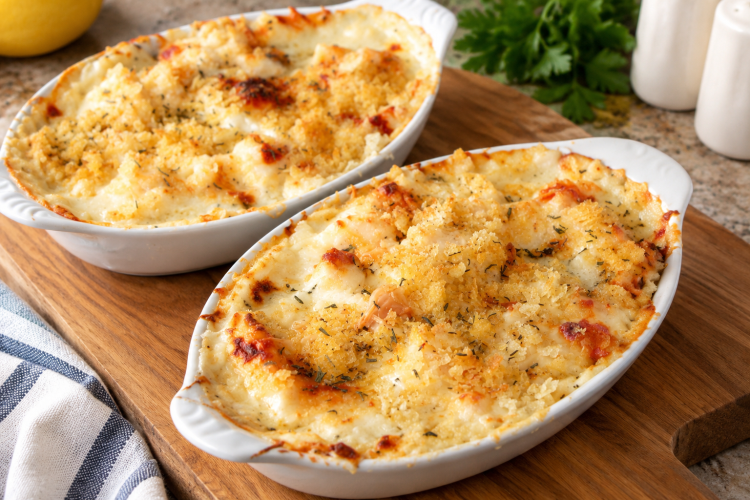
Keto Newfoundland Cod Au Gratin is a comforting seafood dish inspired by the traditional cooking of Newfoundland and the eastern coast of Canada. It combines tender pieces of cod with a creamy white cheese sauce and a golden, crunchy topping. This version brings together the familiar flavors of baked cod, melted cheddar, Parmesan, garlic, and Dijon mustard in a satisfying main course that works well for family dinners or a special weekend meal. Its rich sauce and generous layer of cheese make it an appealing choice for anyone who enjoys hearty seafood recipes.
Traditional Newfoundland cod au gratin is commonly prepared with cod, a creamy béchamel-style sauce, and a layer of cheese or breadcrumbs. This recipe follows that comforting approach while using a flavorful cheese sauce and crushed plain potato chips for the topping. The result is a delicious combination of soft fish, smooth sauce, melted cheese, and crisp texture. It can be baked in a single square dish for a family-style meal or divided into individual ramekins for a more elegant presentation.
Although the recipe is inspired by a classic maritime Canadian dish, it is also suitable for gluten-free cooking when the ingredients are checked carefully. Cornstarch or potato starch helps thicken the sauce without relying on wheat flour. However, anyone following a strict ketogenic diet should be aware that the recipe contains milk and potato chips, which contribute carbohydrates. Small adjustments to those ingredients may be necessary to make the dish fit a particular daily carbohydrate target.
What Makes Newfoundland Cod Au Gratin Special?
Newfoundland has a long connection with cod fishing, and cod remains an important ingredient in the region’s traditional seafood cooking. Its mild taste, flaky texture, and versatility make it suitable for a wide variety of meals. Baking cod in a creamy sauce is especially appealing because the fish absorbs some of the surrounding flavors while retaining its delicate character. The sauce also helps keep the fish moist during baking, creating a dish that feels substantial without relying on a heavy meat-based main course.
One of the best features of cod au gratin is its balance of flavors. Cod has a gentle, slightly sweet taste that pairs naturally with sharp cheddar and Parmesan. Garlic adds savory depth, onion provides sweetness, and Dijon mustard brings a subtle tang that prevents the cheese sauce from tasting too rich. Dried summer savory contributes a distinctive herbal note that complements seafood particularly well. Together, these ingredients create a familiar, homestyle flavor profile that feels comforting without being overly complicated.
The topping adds another important element. As the dish bakes, the cheese melts into the creamy sauce while the crushed potato chips develop a lightly crisp surface. That contrast between tender fish, smooth sauce, and crunchy topping is part of what makes baked cod au gratin so enjoyable. Each serving delivers several textures in one dish, making it a practical option when you want a satisfying dinner without preparing multiple complicated side dishes.
Why You Will Love This Cheesy Baked Cod Recipe
This creamy baked cod recipe uses accessible ingredients and straightforward cooking techniques. There is no need to prepare a complicated seafood stock or spend hours developing the sauce. The cod is arranged in a baking dish, a cheese sauce is prepared on the stovetop, and everything is combined before going into the oven. Once assembled, the oven does most of the work, allowing you to prepare a salad or another simple side dish while dinner cooks.
Another advantage is its flexibility. The recipe can be prepared in one eight-inch square baking dish or divided among four to six individual ramekins. A large baking dish is convenient for family meals, while individual portions make the dish attractive for dinner parties or a special occasion. The ingredients remain the same, but the presentation can change to suit your table and serving needs.
The combination of cheddar and Parmesan also gives the sauce a satisfying depth of flavor. Cheddar melts into the sauce and provides a familiar cheesy taste, while Parmesan adds a savory, slightly nutty quality. Butter, milk, Dijon mustard, garlic, and onion build the foundation of the sauce, ensuring that the fish is surrounded by more than just melted cheese. The finished meal is rich, flavorful, and filling.
Choosing the Best Cod for Baking
Cod is the main ingredient, so choosing good-quality fish makes a noticeable difference. Cod loins are particularly useful because they tend to be thicker and produce generous pieces when cut into cubes. Their size also helps the fish hold its shape during preparation and baking. Boneless cod fillets work equally well, especially when they are readily available at your local grocery store or fish market.
Fresh cod can be used directly after cutting it into approximately one-inch pieces. Frozen cod is another convenient option, but it needs extra preparation. Allow the fish to thaw partially before cutting, then let it thaw completely and drain away the excess liquid. Pat the pieces dry with paper towels before arranging them in the baking dish. Removing excess moisture helps prevent the finished sauce from becoming watery and allows the cheese mixture to maintain a creamy consistency.
If cod is unavailable, another boneless white fish may be used as an alternative. Choose a fish with a mild flavor and a texture that holds together reasonably well when baked. Whichever fish you choose, cut it into similar-sized pieces so it cooks more evenly. Check carefully for any remaining bones before placing the fish in the dish, especially when working with fillets.
Understanding the Creamy Cheese Sauce
The sauce is the heart of this Newfoundland-style baked cod recipe. Butter provides richness, while finely chopped onion and minced garlic establish a savory base. Cooking these ingredients until the onion becomes soft and translucent allows their flavors to develop without leaving harsh raw notes in the finished dish. Stirring regularly also helps prevent the garlic from browning too quickly, which can make the sauce taste bitter.
Cornstarch or potato starch is used to thicken the sauce. After the onion and garlic have softened, stir in the starch and cook it briefly before adding the remaining ingredients. Dijon mustard is incorporated next, followed by dry white wine and milk. Whisking carefully as the liquids are added helps produce a smooth mixture with fewer lumps. Gentle heating allows the starch to thicken the liquid and gives the sauce enough body to coat the fish.
The cheese should be added after the sauce begins to thicken. Stirring in part of the Parmesan and a small handful of cheddar creates a creamy base that clings to the cod. The remaining cheddar and Parmesan are reserved for the upper layer, where they add flavor and help create a rich baked finish. Season the sauce with dried summer savory, salt, and pepper, remembering that the cheese and potato chips already contribute some saltiness.
The Role of Dijon Mustard, Garlic, and Summer Savory
Dijon mustard may seem like a small addition, but it helps bring the sauce together. Its gentle acidity cuts through the richness of the butter, milk, and cheese, while its distinctive flavor complements the mild taste of cod. The mustard should blend into the sauce rather than dominate it. Whisking it in thoroughly before adding the liquids helps distribute its flavor throughout the mixture.
Garlic and onion provide the savory foundation that makes the sauce taste complete. The onion becomes sweeter as it softens, while the garlic contributes a warm aroma. Both ingredients should be cooked gently rather than browned heavily. This approach keeps their flavors balanced and allows the cheese and seafood to remain the main focus of the dish.
Dried summer savory gives the recipe a traditional herbaceous character. It has a distinctive flavor that works well with fish, creamy sauces, and other savory ingredients. If you enjoy experimenting with herbs, dried dill or dried thyme can also complement cod, although they will produce a slightly different flavor. For the closest match to the supplied recipe, use the specified dried summer savory.
How to Make Keto Newfoundland Cod Au Gratin
Step 1: Prepare the Oven and Baking Dish
Preheat the oven to 350°F (180°C). Lightly prepare an eight-inch square baking dish if needed, then arrange the boneless cod pieces in a single layer. Alternatively, divide the fish among four to six individual ramekins. Keeping the pieces relatively evenly distributed makes it easier to coat them with sauce and helps the fish cook consistently. If you are using previously frozen cod, make sure it has thawed completely and has been thoroughly drained before proceeding.
Step 2: Soften the Onion and Garlic
Place the butter in a medium saucepan over medium heat and allow it to melt. Add the finely chopped onion and pressed or minced garlic. Cook the mixture, stirring frequently, until the onion is tender and translucent. Avoid letting the garlic burn, as this can introduce a bitter flavor into the finished sauce. This short cooking step builds the base flavor and gives the creamy sauce a more rounded, savory taste.
Step 3: Add the Starch and Dijon Mustard
Stir the cornstarch or potato starch into the softened onion and garlic mixture. Continue cooking for approximately one minute, stirring regularly so the starch is distributed throughout the butter. Add the Dijon mustard and whisk until it is well incorporated. Taking the time to combine these ingredients thoroughly helps prepare the sauce for the liquids and reduces the likelihood of uneven thickening.
Step 4: Whisk in the Wine and Milk
Carefully pour the dry white wine into the saucepan while whisking continuously. Allow the mixture to cook for about two minutes, whisking frequently. Add the milk gradually, continuing to whisk until the sauce is smooth. Heat the mixture until it begins to thicken, adjusting the heat as necessary to maintain a gentle simmer rather than a vigorous boil. Frequent stirring helps prevent the sauce from sticking to the bottom of the pan.
Step 5: Melt the Cheese into the Sauce
Once the sauce has started to thicken, reduce the heat to medium-low. Add half of the Parmesan and a small handful of the cheddar. Stir until the cheese melts and the sauce becomes thick, creamy, and smooth. Season with dried summer savory, salt, and black pepper to taste. Keep in mind that the final topping will contain additional cheese and potato chips, so it is best to season gradually rather than adding too much salt at once.
Step 6: Coat the Cod with the Sauce
Pour the prepared cheese sauce over the cod pieces in the baking dish or ramekins. Gently stir or turn the fish as needed to distribute the sauce evenly without breaking the pieces apart. Make sure the fish is well coated, since the sauce helps protect it from drying out during baking and provides flavor throughout each serving. Arrange the fish evenly again before adding the toppings.
Step 7: Add the Cheese and Crunchy Topping
Scatter the remaining cheddar over the fish mixture, followed by the remaining Parmesan. Finish by spreading the crushed plain potato chips over the top. Aim for an even layer so the topping covers most of the surface. The cheese melts into the sauce as the dish bakes, while the potato chips provide a crisp, golden finish that contrasts with the soft cod underneath.
Step 8: Bake Until the Fish Is Cooked
Place the uncovered dish in the preheated oven. Individual ramekins generally take approximately 35 minutes, while an eight-inch square baking dish may need around 50 minutes. These times are estimates because the thickness of the fish, the depth of the dish, and the starting temperature of the ingredients can affect cooking. Bake until the sauce is bubbling and the cod is opaque and flakes easily with a fork. For food safety, the thickest pieces of fish should reach an internal temperature of 145°F (63°C).
Step 9: Rest Briefly and Serve Hot
Remove the dish from the oven once the fish is fully cooked and the top is golden. Let it stand briefly before serving so the bubbling sauce can settle slightly. Serve the cod au gratin while it is hot, making sure each portion includes plenty of creamy sauce, melted cheese, and the crisp topping. A fresh vegetable side or a simple salad can provide a refreshing contrast to the rich seafood dish.
What to Serve with Cod Au Gratin
Because cod au gratin already contains fish, a creamy sauce, and a substantial cheese topping, simple side dishes work especially well. Steamed green beans, roasted broccoli, asparagus, or a fresh green salad can add color and freshness without competing with the main course. Vegetables with a light seasoning of salt, pepper, and lemon are particularly suitable because their bright flavor balances the richness of the cheese sauce.
For a more traditional comfort-food meal, you can serve the cod with boiled vegetables or a modest portion of potatoes. However, if you are aiming to keep the meal lower in carbohydrates, non-starchy vegetables are generally a more practical accompaniment. A cucumber salad or leafy greens with a light vinaigrette can also provide a crisp contrast to the soft, creamy texture of the baked fish.
If you are serving individual ramekins to guests, consider placing each one on a heat-safe plate with a small side salad. This presentation looks attractive and makes portioning straightforward. The recipe is substantial enough to serve as the centerpiece of a meal, so there is usually no need for several heavy side dishes.
Is Newfoundland Cod Au Gratin Keto and Gluten-Free?
This recipe is described as gluten-free because it uses cornstarch or potato starch rather than wheat flour to thicken the sauce. However, gluten-free suitability depends on checking the labels of the Dijon mustard, potato chips, cheese, and other packaged ingredients for possible gluten-containing additives or cross-contact warnings. People with celiac disease should select products that meet their specific safety requirements.
The recipe is not automatically suitable for a strict ketogenic diet in its original form. Milk contains naturally occurring carbohydrates, and plain potato chips contribute additional carbohydrates. Cornstarch also contains carbohydrates, although potato starch does as well. The supplied nutritional information lists approximately 11 grams of carbohydrates per serving, but individual brands, ingredient quantities, and serving sizes can change that figure.
If you are following a ketogenic eating plan, review the carbohydrate allowance for your meals and consider whether the original ingredients fit your needs. Possible adaptations include using an unsweetened, lower-carbohydrate milk alternative, selecting a suitable thickener, or replacing the potato chip topping with a lower-carbohydrate alternative. Such changes alter the original recipe, so the nutritional values would need to be recalculated rather than assumed to remain the same.
Tips for the Best Baked Cod Au Gratin
Drain Frozen Fish Thoroughly
Excess water is one of the most common reasons a creamy fish casserole becomes thin. Frozen cod can release a surprising amount of liquid as it thaws, so do not transfer it directly from its thawing container into the baking dish. Allow it to thaw completely, drain it carefully, and pat the surface dry with paper towels. This simple step helps preserve the intended consistency of the sauce.
Whisk the Sauce Frequently
Whisking while adding the wine and milk helps keep the sauce smooth. Add the liquids carefully, and allow the sauce to thicken gradually over moderate heat. If the mixture becomes too hot too quickly, it may stick to the pan or thicken unevenly. Once the cheese has been added, lower the heat and stir gently until it melts into the sauce.
Avoid Overcooking the Cod
Cod is naturally delicate and can become dry or break into very small pieces when overcooked. Begin checking the fish as the estimated cooking time approaches, especially if using shallow ramekins or thinner fillet pieces. The cod should be opaque and separate easily with a fork, and the thickest portion should reach 145°F (63°C). A food thermometer is more reliable than appearance alone.
Choose a Suitable Baking Dish
A square baking dish creates one larger casserole that is easy to serve at the table. Ramekins provide individual portions and can be convenient when preparing a meal for guests. Since individual portions may cook more quickly, check them earlier than a large dish. Always use oven-safe ramekins and place them on a sturdy baking tray if needed for easier handling.
Make the Topping Even
Crush the plain potato chips into small pieces rather than leaving large, whole chips. Smaller pieces spread more evenly and help create a consistent topping. Avoid pressing them deeply into the sauce, as they are intended to provide a surface layer. For the best texture, serve the dish soon after baking while the topping still has some crispness.
Frequently Asked Questions
Can I Use Frozen Cod Instead of Fresh Cod?
Yes, frozen cod can be used in this recipe. Partially thaw the fish before cutting it into pieces, then allow it to thaw completely. Drain off all excess liquid and pat the pieces dry before arranging them in the baking dish. Proper draining is especially important because excess moisture can dilute the cheese sauce and affect the final texture.
Can I Prepare Cod Au Gratin Ahead of Time?
You can prepare some components in advance, such as chopping the onion and garlic, measuring the ingredients, and preparing the fish. For the best texture, assemble and bake the dish close to serving time. If you assemble it ahead, keep it refrigerated and ensure that the fish remains safely chilled. Because a cold assembled dish may need longer to heat through, check the fish’s internal temperature instead of relying only on the usual cooking time.
Can I Replace the White Wine?
Yes. The supplied recipe allows the dry white wine to be replaced with an equal amount of chicken broth, vegetable broth, or seafood stock. A squeeze of lemon juice can brighten the sauce when using broth instead of wine. This substitution changes the flavor slightly but still provides liquid for preparing the creamy sauce.
What Other Fish Can I Use?
Another boneless white fish can work if cod is unavailable. Look for a mild-tasting variety with a texture suitable for baking in sauce. Choose pieces of a similar size and thickness to help them cook evenly. Cooking times may vary depending on the fish, so check for opacity, easy flaking, and a safe internal temperature before serving.
How Should I Store Leftovers?
Transfer leftover cod au gratin to an airtight container and refrigerate it promptly. The supplied recipe recommends keeping leftovers for about three days. For food safety, maintain the refrigerator at 40°F (4°C) or below, and do not leave cooked fish at room temperature for extended periods. If the dish has been sitting out for more than two hours, it is safest to discard it.
What Is the Best Way to Reheat Leftovers?
The microwave is a convenient option for reheating individual portions. Place the serving in a microwave-safe dish and heat it in short intervals, checking and stirring the sauce gently where practical. Reheat until the fish and sauce are thoroughly hot. Avoid prolonged heating, since cod can become dry and the sauce may separate if overheated.
Why Is My Cheese Sauce Too Thin?
The sauce may be too thin if the starch was not distributed properly, the mixture did not heat long enough to thicken, or the cod released too much water during baking. Whisk the sauce thoroughly during preparation and allow it to begin thickening before adding the cheese. Thoroughly draining frozen fish is particularly important for achieving a creamy result.
Can I Make Individual Servings?
Yes. Divide the cod among four to six oven-safe ramekins and distribute the sauce, cheese, and crushed potato chips evenly. Bake the individual portions for approximately 35 minutes, checking earlier if the ramekins are small or the fish pieces are thin. The individual servings are convenient for dinner parties and make it easy to present the dish neatly.
Storage and Food Safety Notes
Leftover cod au gratin should be cooled and refrigerated promptly in a covered container. It can generally be kept in the refrigerator for up to three days, as indicated in the original recipe notes. For the best quality, store the fish with its sauce so it does not dry out, and reheat only the amount you intend to eat. Repeated heating and cooling can reduce the texture and quality of the seafood.
For safe handling, keep raw cod separate from ready-to-eat foods and wash hands, utensils, and work surfaces after contact with raw fish. Thaw frozen cod in the refrigerator or by another safe method, rather than leaving it on the counter for hours. Cook the fish to an internal temperature of 145°F (63°C), measured in the thickest portion, before serving.
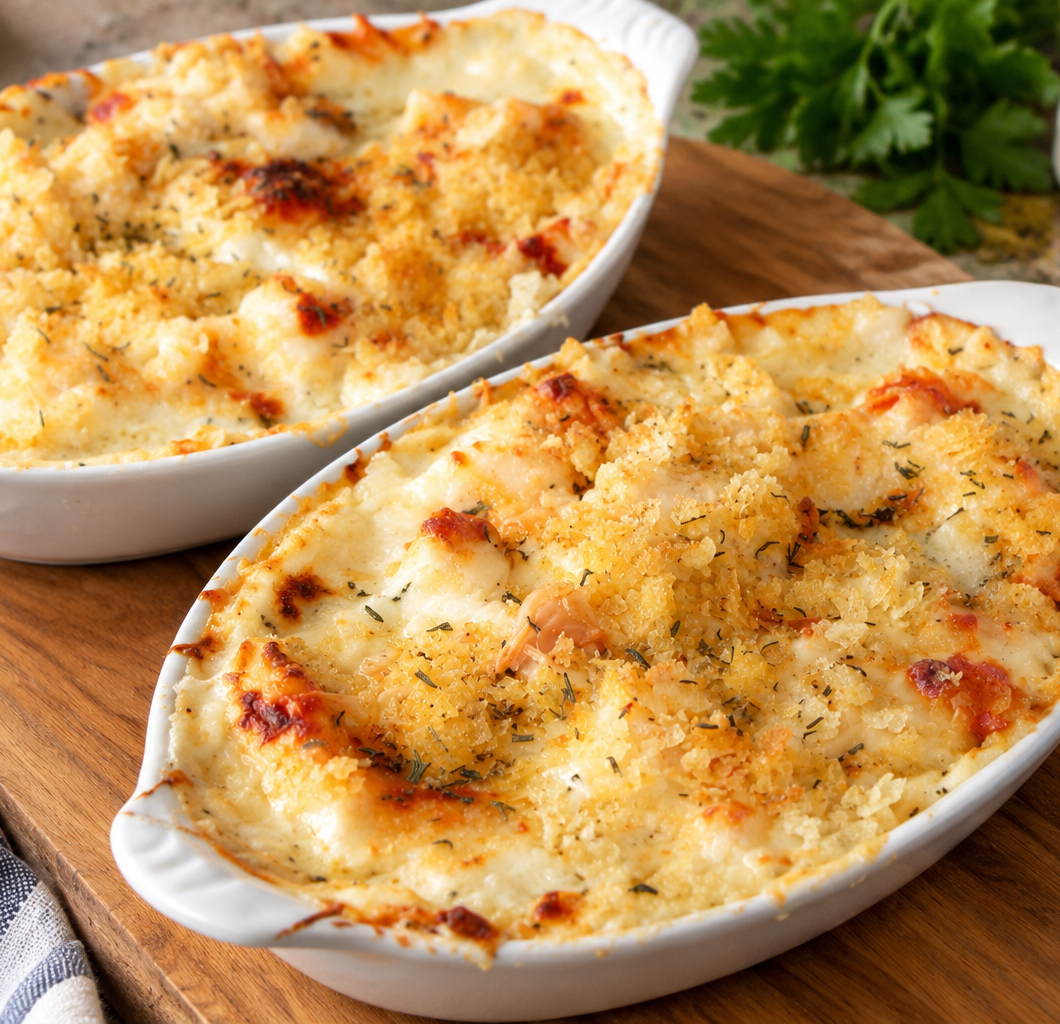
Keto Newfoundland Cod Au Gratin
 Recipe by admin
A traditional Newfoundland-inspired baked cod dish featuring tender boneless cod, creamy Dijon cheese sauce, cheddar, Parmesan, and a crunchy potato chip topping. This comforting seafood casserole is gluten-free when suitable ingredients are used.
6
servings15
minutes1
hour10
minutes358
kcal1
hour25
minutesIngredients
2 lbs fresh boneless cod loins
¼ cup butter
½ small onion, finely chopped
2 garlic cloves, pressed or minced
¼ cup cornstarch or potato starch
1 tablespoon Dijon mustard
¼ cup dry white wine
2¼ cups milk
⅔ cup shredded Parmesan cheese
1 cup shredded cheddar cheese
2 teaspoons dried summer savory
Salt and pepper, to taste
1 small bag plain potato chips, crumbled
Directions
- Prepare the Cod
Preheat the oven to 350°F (180°C). Cut the boneless cod into approximately one-inch pieces and arrange them in a single layer in an eight-inch square baking dish. Alternatively, divide the fish among four to six individual ramekins. - Cook the Onion and Garlic
Melt the butter in a medium saucepan over medium heat. Add the finely chopped onion and minced or pressed garlic. Cook, stirring frequently, until the onion becomes tender and translucent. - Add the Starch and Mustard
Stir the cornstarch or potato starch into the saucepan. Cook for another minute, stirring frequently. Add the Dijon mustard and whisk until thoroughly incorporated. - Prepare the Creamy Sauce
Carefully pour in the dry white wine while whisking until smooth. Cook for approximately two minutes, whisking frequently. Add the milk and continue whisking until the mixture is smooth. Heat gently until the sauce begins to thicken. - Melt in the Cheese
Reduce the heat to medium-low. Add half of the Parmesan cheese and a small handful of the cheddar. Stir until the cheese melts and the sauce becomes thick and smooth. Add the dried summer savory, salt, and pepper to taste. - Combine the Sauce and Fish
Pour the prepared cheese sauce over the cod. Gently stir to distribute the sauce evenly and coat the fish without breaking the pieces apart. - Add the Topping
Sprinkle the remaining cheddar cheese over the fish mixture, followed by the remaining Parmesan. Spread the crumbled plain potato chips evenly over the top. - Bake the Cod Au Gratin
Bake uncovered in the preheated oven. Individual ramekins generally take approximately 35 minutes, while an eight-inch square baking dish may take around 50 minutes. Cooking time will vary depending on the dish and thickness of the fish. - Bake the Cod Au Gratin
Bake uncovered in the preheated oven. Individual ramekins generally take approximately 35 minutes, while an eight-inch square baking dish may take around 50 minutes. Cooking time will vary depending on the dish and thickness of the fish. - Serve
Remove the dish from the oven and allow it to rest briefly. Serve hot, with each portion containing tender cod, creamy cheese sauce, and a crunchy topping.
Notes
- Frozen cod: Partially thaw the fish before cutting it. Allow it to thaw completely, drain thoroughly, and pat dry before placing it in the baking dish.
- Alternative fish: Another boneless white fish can be substituted for cod.
- Wine substitute: Replace the dry white wine with the same amount of chicken broth, vegetable broth, or seafood stock. A squeeze of lemon juice can brighten the flavor.
- Herb alternatives: Dried dill or dried thyme can be used instead of summer savory, although the flavor will differ.
- Cheese alternatives: Provolone, Gouda, or Monterey Jack can be used instead of cheddar if desired.
- Vegetable additions: Asparagus or broccoli can be added for extra variety.
- Storage: Keep leftovers in an airtight container in the refrigerator for up to three days.
- Reheating: Reheat individual portions in the microwave until thoroughly hot.
Nutrition Facts
6 servings per container
- Amount Per ServingCalories358
- % Daily Value *
- Total Fat
16g
21%
- Total Carbohydrate
11g
4%
- Total Sugars 5g
- Protein 39g 78%
* The % Daily Value tells you how much a nutrient in a serving of food contributes to a daily diet. 2,000 calories a day is used for general nutrition advice.


