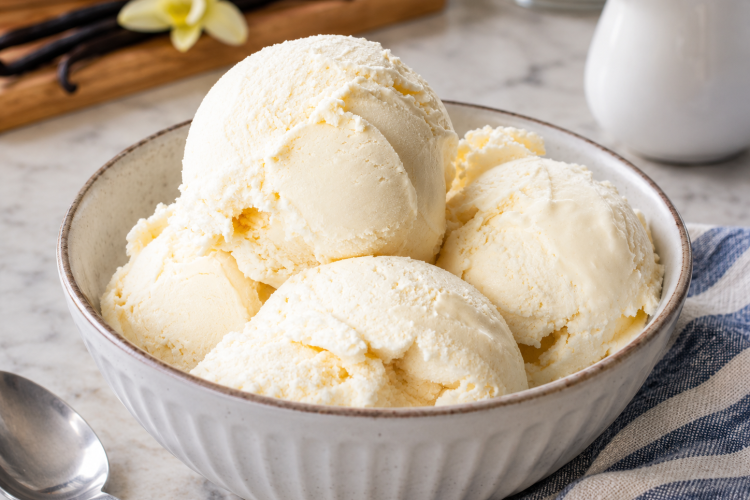
Homemade keto vanilla ice cream is a delicious way to enjoy a classic frozen dessert while keeping carbohydrates low. Made with heavy cream, reduced-carb milk or unsweetened almond milk, egg yolks, a sugar-free sweetener, vanilla extract, and optional glycerin, this recipe creates a smooth, creamy treat with a rich vanilla flavor. It is an excellent choice for anyone following a ketogenic or low-carb lifestyle who wants a simple dessert without traditional granulated sugar. Best of all, the preparation takes only five minutes before the ice cream maker does the rest of the work.
This easy keto vanilla ice cream recipe is suitable for serving after dinner, enjoying as an afternoon snack, or pairing with other homemade desserts. A scoop tastes wonderful on its own, but it can also be served with a warm brownie, a slice of low-carb cake, or a sugar-free chocolate dessert. Its classic flavor makes it a useful recipe to keep on hand throughout the year. With only a handful of ingredients and straightforward preparation, you can make a frozen dessert at home without relying on expensive packaged keto ice cream.
Why You Will Love This Keto Vanilla Ice Cream Recipe
One of the best features of homemade sugar-free vanilla ice cream is its simple ingredient list. Many commercial low-carb ice creams contain specialty fibers, stabilizers, and other ingredients that may not be readily available in an ordinary kitchen. This homemade version focuses on six ingredients, allowing you to understand exactly what goes into your dessert. You can also select the milk and sweetener that best suit your preferences, making it easier to adapt the recipe to your usual low-carb pantry.
Another reason to make this recipe is its rich, creamy texture. Heavy cream provides the fat that gives ice cream its smooth mouthfeel, while egg yolks contribute richness. Vanilla extract adds the familiar aroma and flavor that make vanilla ice cream so popular. The optional vegetable glycerin helps reduce the firmness that sugar-free ice cream can develop during freezing. Together, these ingredients create a satisfying frozen dessert that can be enjoyed in a bowl, added to a sundae, or served alongside your favorite low-carb baked goods.
The recipe is also convenient for home cooks who prefer easy desserts with minimal preparation. You do not need to prepare a separate sweetened condensed milk mixture, cook a complicated custard, or spend a long time mixing ingredients by hand. Simply combine the ingredients, churn the mixture in an ice cream maker according to its instructions, and freeze until it reaches your preferred consistency. This straightforward process makes homemade keto ice cream a practical option for both beginners and experienced home cooks.
What Makes This Vanilla Ice Cream Keto-Friendly?
Traditional vanilla ice cream commonly contains sugar and milk in quantities that can increase the carbohydrate content of a serving. This keto-friendly version uses a sugar-free sweetener and allows reduced-carb milk or unsweetened almond milk as the liquid component. These choices can help lower the carbohydrate content compared with many conventional recipes. The heavy cream also contributes a rich texture, so the dessert remains satisfying even without ordinary sugar.
The nutritional profile depends on the ingredients you select. Reduced-carb milk, unsweetened almond milk, and different sugar substitutes can produce slightly different results. For anyone following a strict ketogenic diet, it is important to check product labels and calculate the carbohydrates using the specific brands used in the recipe. The provided nutrition information lists approximately 5 grams of total carbohydrates and 4.8 grams of net carbohydrates per one-cup serving. Individual results may vary depending on ingredient substitutions and the nutritional information provided by manufacturers.
Although the recipe is designed for a low-carb eating pattern, it is not automatically suitable for every dietary requirement. Heavy cream and egg yolks make it unsuitable for a vegan diet, while the standard version contains dairy. People who need to avoid dairy can explore the coconut milk substitution described below. The recipe is also gluten-free and grain-free when prepared with suitable ingredients, but it is always sensible to check ingredient labels if you have a food allergy or follow a medically necessary restricted diet.
Ingredients for Homemade Keto Vanilla Ice Cream
You need just six ingredients to prepare this creamy frozen dessert. Each ingredient has a particular purpose, from building the ice cream’s rich texture to adding sweetness and helping the finished mixture remain easy to scoop. Using good-quality ingredients can make a noticeable difference, especially in a recipe with such a simple flavor profile. Because vanilla is the main flavor, choose an extract you enjoy rather than relying on a low-quality substitute.
Heavy Cream for a Rich and Creamy Texture
Heavy cream is the foundation of this keto vanilla ice cream recipe. Its high fat content creates a luxurious texture and helps the frozen dessert feel smooth rather than watery. It also balances the sweetness of the sweetener and gives the vanilla flavor a fuller, more rounded taste. For the best results, use heavy cream or heavy whipping cream that is suitable for whipping and contains no added sugar that would affect your nutritional calculations.
The amount of cream used in this recipe is important because it contributes much of the dessert’s richness. Replacing it with a low-fat liquid in the original formula may change the texture and increase the likelihood of an icy result. If you need a dairy-free variation, full-fat canned coconut milk can be considered as a replacement, although it will give the finished ice cream a noticeable coconut flavor and may change its consistency.
Choosing the Right Milk
The recipe allows reduced-carb milk or unsweetened almond milk, giving you flexibility based on availability and dietary preferences. Reduced-carb milk is the preferred option in the supplied recipe because it provides a familiar dairy flavor while keeping carbohydrates lower than some conventional milk products. Unsweetened almond milk is another option for those who prefer a lighter liquid with a mild nutty taste. Always choose an unsweetened variety to avoid adding unnecessary sugar.
For the best texture, use the type of milk specified in the recipe rather than making an untested substitution. Different milk products contain different amounts of water, fat, protein, and carbohydrates, all of which can affect how the ice cream freezes. If you use almond milk, select a plain, unsweetened version instead of a sweetened vanilla variety, since the recipe already contains vanilla extract and a separate sweetener.
Egg Yolks for a Smooth Finish
Egg yolks contribute richness and help create a creamy consistency. They are commonly used in traditional custard-style ice cream because their fats and emulsifying properties help the ingredients combine into a smooth mixture. In this quick recipe, the yolks are blended with the other ingredients instead of being cooked into a custard first. That keeps preparation simple and reduces the amount of equipment needed.
Because this recipe does not require cooking the egg yolks, food safety deserves attention. Raw eggs can carry harmful bacteria, including Salmonella. For a safer option, use pasteurized egg yolks or prepare the mixture using an appropriate cooked-base method that heats the eggs sufficiently. Follow reliable food-safety guidance and cool any cooked base promptly before churning. Do not assume that freezing the ice cream makes raw eggs safe.
Sugar-Free Sweetener for Balanced Sweetness
A suitable sugar-free sweetener provides the sweetness traditionally supplied by sugar. The original recipe uses a proprietary blend of sweeteners, including sugar alcohols such as erythritol or xylitol, or allulose, together with stevia. The blend is described as approximately twice as sweet as sugar. Because sweeteners differ in sweetness and behavior during freezing, it is important to use the correct quantity for the particular product you choose.
Alternative sweeteners may work, but they are not always interchangeable in equal amounts. Some sugar substitutes can create a cooling sensation, while others may leave the finished ice cream firmer or slightly grainy after freezing. Certain sugar alcohols can also cause digestive discomfort when consumed in large quantities. If you use xylitol, keep it safely away from dogs because it is highly toxic to them, even in relatively small amounts.
Vanilla Extract for Classic Flavor
Vanilla extract gives this recipe its signature flavor. Since there are relatively few ingredients, the quality of the vanilla is especially noticeable. A good extract adds a warm aroma and helps the finished dessert taste like classic vanilla ice cream rather than simply sweetened cream. Pure vanilla extract is a useful choice, although a suitable vanilla flavoring may also work according to your preference and dietary requirements.
Measure the vanilla carefully so it complements the cream without overwhelming it. Two teaspoons provide a noticeable vanilla flavor throughout the batch. If you enjoy a stronger vanilla taste, you can experiment in a future batch, but remember that changing the quantities may affect the final balance. The goal is a smooth, sweet, vanilla-forward dessert that pairs well with a wide range of other flavors.
Optional Glycerin for Easier Scooping
Vegetable glycerin is included as an optional ingredient because sugar-free ice cream can freeze harder than traditional ice cream. Sugar affects the freezing behavior of conventional desserts, and many sugar substitutes do not reproduce that effect in exactly the same way. A small amount of glycerin can help the mixture remain softer and more manageable when stored in the freezer, making it easier to serve directly from the container.
If you prefer not to use glycerin, you can leave it out and allow the ice cream to soften at room temperature before serving. The supplied recipe suggests approximately 30 minutes, although the exact time depends on the container, freezer temperature, and portion size. For food safety and quality, soften only the amount you plan to serve and avoid repeatedly melting and refreezing the entire batch.
How to Make Keto Vanilla Ice Cream Step by Step
Step 1: Gather and Measure the Ingredients
Before preparing the mixture, measure the heavy cream, reduced-carb milk or unsweetened almond milk, egg yolks, sugar-free sweetener, vanilla extract, and optional glycerin. Having everything ready makes the process faster and reduces the chance of forgetting an ingredient. If your ice cream maker requires a pre-frozen bowl, make sure it has been frozen for the amount of time recommended by the manufacturer. This preparation is important because the machine needs to be cold enough to freeze the mixture as it churns.
Check that your blender and utensils are clean, and choose a freezer-safe container for storing the finished ice cream. If you are using eggs that have not been pasteurized, consider changing to pasteurized yolks or using a properly cooked ice cream base. Taking a moment to prepare the equipment and ingredients helps the rest of the recipe go smoothly, especially when making homemade ice cream for the first time.
Step 2: Blend Until the Mixture Is Smooth
Place the heavy cream, milk, egg yolks, sweetener, vanilla extract, and optional glycerin in a blender. Blend until the ingredients are evenly combined and the mixture looks smooth. You can also whisk the ingredients together in a large bowl if you prefer not to use a blender, although blending can make it easier to distribute the sweetener and other ingredients throughout the liquid.
Avoid blending longer than necessary, particularly if your blender incorporates a lot of air or warms the mixture. The objective is to combine the ingredients evenly, not to turn the cream into whipped cream. Check the mixture before moving to the next step to ensure that the sweetener has dispersed as well as possible. If you are preparing a cooked base for egg safety, follow a suitable custard method before cooling the mixture and proceeding.
Step 3: Churn in the Ice Cream Maker
Pour the blended mixture into your ice cream maker and churn it according to the manufacturer’s instructions. Churning freezes the liquid gradually while moving it around the machine, helping create a more even texture than simply placing the unchurned mixture in the freezer. The time required varies by machine, so use the manufacturer’s recommended process rather than relying on a fixed number of minutes.
As the mixture churns, it should become thicker and take on the texture of soft-serve ice cream. Some machines produce a firmer result than others, depending on their design and cooling power. Avoid overfilling the machine, since the mixture needs room to move and expand slightly as air is incorporated. For the best results, start with a properly chilled base and follow the capacity limits for your particular appliance.
Step 4: Transfer and Freeze Until Firm
Once the mixture has finished churning, transfer it to a clean, freezer-safe container. Spread it evenly and close the container with an airtight lid. The ice cream may be soft immediately after churning, so additional freezer time is usually necessary if you prefer firm scoops. Place the container on a level shelf in the coldest part of your freezer and allow the mixture to firm up before serving.
The amount of additional freezing time depends on your freezer, container size, and preferred texture. A shallow container may help the ice cream firm more evenly, while a deep container may take longer. Avoid placing the container in the freezer door, where repeated temperature changes can encourage ice crystals to form. If you have omitted glycerin, expect the ice cream to become especially firm after prolonged storage.
Tips for the Best Keto Vanilla Ice Cream
Chill the Ice Cream Maker Properly
If your machine uses a removable freezer bowl, freeze it for the full period recommended in its instructions. A bowl that is not sufficiently cold may struggle to freeze the mixture, leaving the finished ice cream soft and slow to firm. Preparing the machine ahead of time is one of the simplest ways to improve the texture. Also, make sure the mixture is not unnecessarily warm before churning, especially if you have used a cooked base.
Choose Your Sweetener Carefully
The type of sweetener can affect both taste and texture. The original blend is designed to provide sweetness comparable to twice the sweetness of sugar, so a substitute should not automatically be added in the same amount. Some alternatives are sweeter, while others are less sweet or behave differently when frozen. Follow the conversion guidance provided with the specific sweetener, and make adjustments only when you understand how it compares with the original blend.
Let the Ice Cream Soften Before Serving
Homemade sugar-free ice cream often becomes very firm in the freezer. If the ice cream is difficult to scoop, allow the container to stand at room temperature for a short period before serving. Around 30 minutes may be appropriate for this recipe, although you should check the texture as it softens because smaller portions will warm more quickly. For convenience, scoop the desired portion into a bowl and let that portion soften instead of warming the whole container.
Use Airtight Storage Containers
An airtight container protects the ice cream from freezer odors and helps limit the formation of ice crystals. Leftover pint containers can be convenient, but a suitable glass or plastic freezer-safe container will also work. Choose a container that fits the batch without leaving a large amount of empty space above the ice cream. Pressing a piece of freezer-safe wrap against the surface, where appropriate, can offer additional protection against air exposure.
How to Make Dairy-Free Keto Vanilla Ice Cream
For a dairy-free variation, the supplied recipe suggests replacing the heavy cream with full-fat coconut milk. Choose full-fat canned coconut milk rather than a low-fat version or a thin coconut milk beverage from a carton. The additional fat helps produce a richer texture, while low-fat alternatives may create a more icy result. Because coconut milk has its own distinctive flavor, the finished dessert will not taste exactly like traditional dairy-based vanilla ice cream.
Check every ingredient label before preparing a dairy-free batch, particularly the sweetener and vanilla extract. If you have an allergy rather than a dietary preference, verify that the products are suitable for your needs and have not been exposed to relevant allergens during manufacturing. The dairy-free variation also requires attention to the egg yolks: replacing the cream does not make the recipe vegan. A fully vegan version would require a separate formulation.
Is It Safe to Use Egg Yolks Without Cooking Them?
This recipe combines the egg yolks directly with the other ingredients without cooking them first. However, raw eggs can carry bacteria that cause foodborne illness, and the risk is not eliminated simply because the mixture will be frozen. People who are pregnant, very young, older, or immunocompromised should be especially cautious about consuming uncooked eggs. Pasteurized egg yolks are a useful alternative when preparing a recipe that does not otherwise involve cooking.
Another option is to make a cooked ice cream base using a reliable method designed to heat the egg mixture to a safe temperature. If you choose this approach, heat and stir the mixture carefully, avoid scrambling the eggs, and cool it promptly before churning. Cooking changes the preparation process slightly, but it can offer greater peace of mind. Always follow food-safety recommendations applicable to your ingredients and circumstances.
Can You Make Keto Vanilla Ice Cream Without Glycerin?
Yes, glycerin is optional in this recipe. Its purpose is to help keep the ice cream soft enough to scoop after freezing, rather than to provide the main vanilla flavor. Without it, the mixture will still churn and freeze, but the finished dessert may become harder during storage. This is common in homemade ice cream that uses sugar substitutes instead of conventional sugar, since the ingredients influence freezing in different ways.
If you decide to omit glycerin, allow the ice cream to soften before serving. The supplied recipe also mentions vodka as an alternative, but alcohol can change the freezing behavior and is not appropriate for everyone. If you prefer to avoid both ingredients, simply leave out the glycerin and plan a little extra time for softening. The texture will depend on your sweetener, freezer temperature, and the length of storage.
Which Ice Cream Maker Should You Use?
An ice cream maker is the main piece of equipment needed for this recipe. Many home models are designed for straightforward preparation and can churn mixtures into a soft, frozen consistency with little effort. Some use a removable bowl that must be frozen in advance, while compressor models have built-in cooling systems. Either type may work, provided it can accommodate the quantity of mixture and follow the manufacturer’s instructions.
If you make homemade ice cream regularly, choosing a machine that is easy to clean and store can make the process more enjoyable. Consider the batch size you usually need, available kitchen space, and whether you are happy to pre-freeze a bowl. You do not need a complicated appliance for this particular recipe. A suitable home ice cream maker and a freezer-safe container are enough to get started.
Serving Ideas for Keto Vanilla Ice Cream
The classic vanilla flavor makes this recipe easy to serve in many ways. Enjoy a small bowl after dinner, add a scoop to a low-carb brownie, or serve it beside a slice of sugar-free cake. You can also create a simple sundae using a low-carb chocolate sauce, chopped nuts, or a few fresh berries that fit your carbohydrate goals. These additions are optional and are not included in the original ingredient list or nutrition estimate.
For a simple dessert platter, serve the ice cream with other homemade treats and let everyone choose their preferred combination. Vanilla pairs well with chocolate, cinnamon, coffee, and many berry flavors, making it a versatile base for different occasions. If you want to experiment with other ice cream flavors, start with the basic technique and consider new ingredients separately so you can track how each change affects sweetness, texture, and carbohydrates.
How to Store Homemade Keto Vanilla Ice Cream
Store the finished ice cream in an airtight, freezer-safe container. Reused pint containers are convenient for individual batches, while a suitable glass or plastic container works well for larger quantities. Keep the ice cream toward the back of the freezer, where temperatures are generally more stable, rather than in the door. Frequent temperature changes can soften the edges and encourage ice crystals to develop when the mixture freezes again.
A loaf pan can also be used if you plan to eat the ice cream relatively soon, but cover it securely to protect the surface from air exposure. For the best texture, use a container with a well-fitting lid and avoid repeatedly leaving the entire batch out to soften. Scoop only what you intend to serve, return the remaining ice cream to the freezer promptly, and follow appropriate food-safety practices for desserts made with egg yolks.
Common Mistakes to Avoid
One common mistake is using a milk or sweetener substitution without checking how it affects the recipe. Different products can have very different carbohydrate levels and freezing properties, even when their names sound similar. Another mistake is failing to freeze the ice cream maker’s bowl for long enough. If the machine is not adequately chilled, the mixture may remain too soft and take longer to firm in the freezer. Reading the manufacturer’s instructions before starting can help prevent this problem.
A second issue is expecting sugar-free ice cream to remain as soft as commercial ice cream straight from the freezer. Without the properties of traditional sugar, homemade low-carb ice cream may freeze quite firmly. Optional glycerin and suitable sweetener choices can help, but the result will still depend on storage temperature. Finally, do not overlook egg safety. Use pasteurized egg yolks or an appropriate cooked-base method if you want to avoid the risks associated with uncooked eggs.
Frequently Asked Questions About Keto Vanilla Ice Cream
Is this keto vanilla ice cream sugar-free?
The recipe uses a sugar-free sweetener instead of conventional granulated sugar, making it suitable for a sugar-free-style dessert when all ingredients are selected accordingly. However, the milk and cream naturally contain some sugars, and the final carbohydrate content depends on the products used. Check the labels on your milk, vanilla extract, and sweetener rather than assuming that every version will have identical nutritional values.
How many carbohydrates are in one serving?
The supplied nutritional information lists 5 grams of total carbohydrates and 0.2 grams of fiber per one-cup serving, which gives approximately 4.8 grams of net carbohydrates. These figures are estimates rather than guarantees. Changing the milk, sweetener, or other ingredients can change the total, so calculate the nutrition using the exact products and serving sizes in your batch if you track carbohydrates closely.
Can I use unsweetened almond milk instead of reduced-carb milk?
Yes. Unsweetened almond milk is one of the alternatives specified in the original recipe. Choose an unsweetened variety to avoid additional sugar, and remember that its flavor and composition differ from reduced-carb dairy milk. The finished ice cream may have a slightly different taste or texture, and its nutritional information may change. Use the same quantity listed on the recipe card.
Why is my homemade keto ice cream too hard?
Sugar-free ice cream often becomes harder because sugar substitutes do not behave exactly like regular sugar during freezing. The freezer temperature, type of sweetener, and amount of fat also affect firmness. Optional glycerin is included to help make the ice cream easier to scoop. If you leave it out, allow the ice cream to soften before serving instead of trying to scoop it straight from a very cold freezer.
Can I make this recipe without an ice cream maker?
The supplied method is designed for an ice cream maker, which churns the mixture while it freezes. Without one, you can experiment with a suitable manual-freezing method, but the texture may be less smooth and more icy. The results are not guaranteed to match those produced by a machine. For the most consistent outcome, use an ice cream maker according to its manufacturer’s instructions.
Can I change the sweetener?
The recipe notes provide conversions for several alternative sweeteners. For Swerve or Lakanto Monk Fruit, the original guidance is to use 1.5 times the listed amount. For Pyure or Trim Healthy Mama Super Sweet, the guidance is to use half the amount. These substitutions are based on the sweetness of the named products and should not be applied automatically to every sweetener sold under similar descriptions.
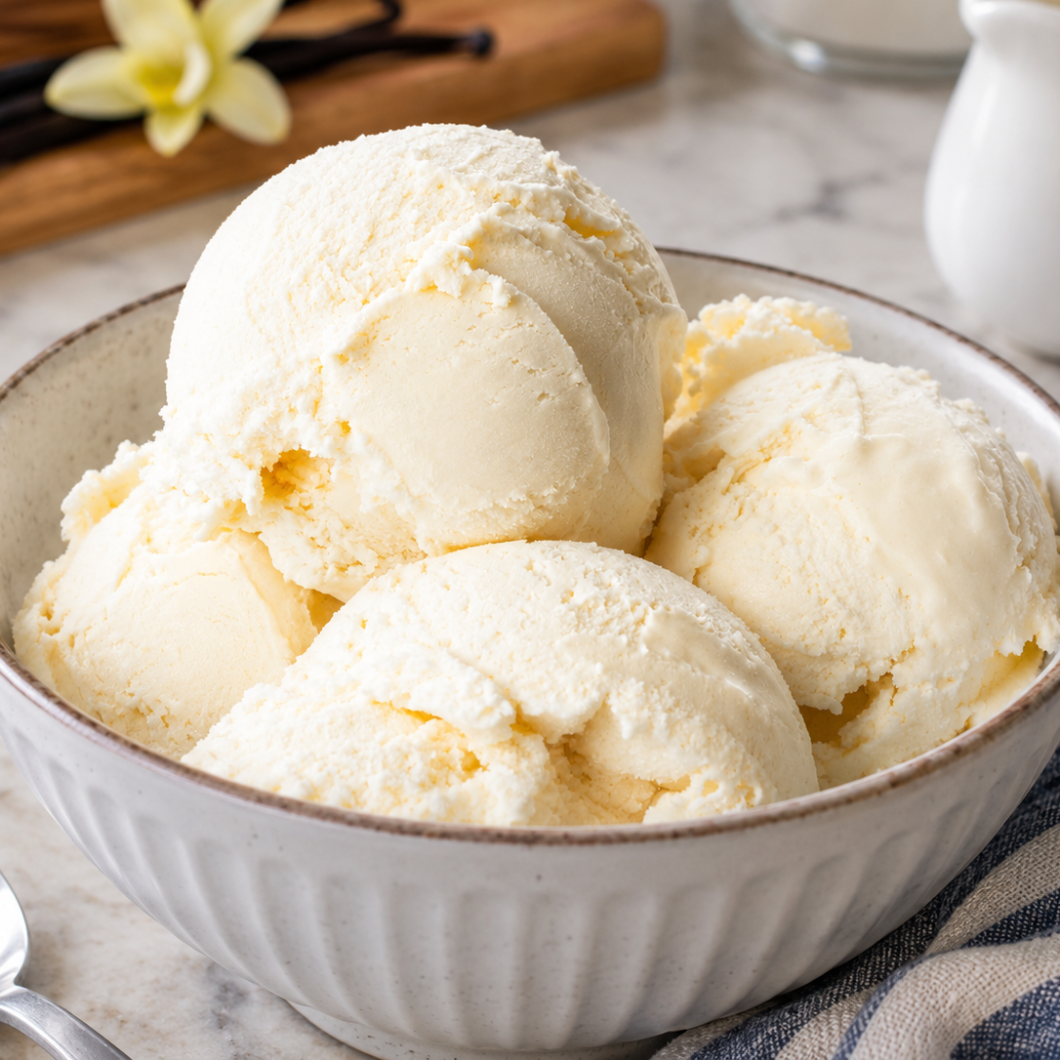
Keto Vanilla Ice Cream
 Recipe by admin
Keto Vanilla Ice Cream
6
servings5
minutes253
kcal5
minutesIngredients
1 1/2 cups heavy cream
1 1/2 cups reduced-carb milk or unsweetened almond milk
3 egg yolks
1/2 cup Joy Filled Eats Sweetener (or see alternatives in recipe notes)
2 teaspoons vanilla extract
2 teaspoons glycerin, optional
Directions
- Combine the ingredients: Add the heavy cream, reduced-carb milk or unsweetened almond milk, egg yolks, sweetener, vanilla extract, and optional glycerin to a blender.
- Blend until smooth: Blend the mixture until all the ingredients are evenly combined. Alternatively, whisk everything together thoroughly in a mixing bowl.
- Churn the mixture: Pour the blended ice cream base into an ice cream maker. Churn according to the manufacturer’s instructions until it reaches a thick, soft-serve consistency.
- Transfer to a container: Spoon the churned ice cream into a clean, freezer-safe container with an airtight lid.
- Freeze until firm: Place the container in the freezer until the ice cream reaches your preferred scooping consistency. If the ice cream becomes too firm, let the portion you intend to serve soften briefly before eating.
Notes
- Milk choice: Reduced-carb milk is the preferred option in the original recipe. Unsweetened almond milk can also be used.
- Egg safety: Since the original method does not cook the egg yolks, consider using pasteurized egg yolks or preparing a properly cooked ice cream base to reduce the risk associated with raw eggs.
- Glycerin: This ingredient is optional and helps keep the ice cream softer in the freezer. If you omit it, allow the ice cream to soften before scooping.
- Sweetener alternatives: The original sweetener blend contains a combination of sweeteners, including sugar alcohols or allulose and stevia, and is described as approximately twice as sweet as sugar.
- Swerve or Lakanto Monk Fruit: The supplied recipe notes recommend using 1.5 times the listed amount when substituting these products.
- Pyure or Trim Healthy Mama Super Sweet: The supplied recipe notes recommend using half the listed amount when substituting these products.
- Dairy-free variation: Full-fat canned coconut milk can replace the heavy cream for a dairy-free variation, although the flavor and texture will differ. The recipe still contains egg yolks.
- Storage: Keep the ice cream in an airtight, freezer-safe container in the coldest part of the freezer. Avoid storing it in the freezer door, where temperature changes can encourage ice crystals.
- Serving suggestion: For easier scooping, let the ice cream soften at room temperature for about 30 minutes if needed. The time may vary with freezer temperature and container size.
Nutrition Facts
6 servings per container
- Amount Per ServingCalories253
- % Daily Value *
- Total Fat
24.6g
31%
- Total Carbohydrate
5g
2%
- Total Sugars 4.6g
- Protein 3.4g 6%
* The % Daily Value tells you how much a nutrient in a serving of food contributes to a daily diet. 2,000 calories a day is used for general nutrition advice.


