This is one of those meals that feels a bit special without actually being complicated. Teriyaki Pineapple Chicken Foil Packets are basically a complete dinner wrapped up neatly in foil and cooked until everything turns juicy, tender, and coated in a sweet-savory glaze.
The idea is simple—chicken, pineapple, vegetables, and teriyaki sauce all cook together in a sealed packet so nothing dries out and all the flavors blend into one rich, slightly sticky, slightly caramelized dish. When it comes out of the oven or grill, it’s steamy, glossy, and full of tropical flavor.
Why this combination works so well
The flavor balance in this dish is what makes it stand out. It’s not just chicken with sauce—it’s layers of taste that build while cooking.
The pineapple brings natural sweetness along with a slight tang that cuts through the richness of the sauce. As it cooks, it softens and releases juice, which blends into the teriyaki and gives it a deeper fruity flavor.
The teriyaki sauce itself brings saltiness, umami, and that thick glossy coating that clings to the chicken. As it heats, it reduces slightly and becomes more concentrated.
The vegetables don’t just fill space—they add texture, freshness, and color. Zucchini softens gently, bell peppers stay slightly crisp, and onions mellow into sweetness. Everything balances each other instead of overpowering.
Ingredients used in this recipe
This recipe uses simple, everyday ingredients, but the combination makes it feel like a restaurant-style meal.
For the chicken, boneless skinless chicken breasts are used because they cook evenly and stay juicy inside the foil. Olive oil helps the seasoning stick and adds a light richness. Garlic powder, onion powder, paprika, salt, and black pepper form the base seasoning. Optional spices like cayenne, Italian seasoning, or smoked paprika can be added depending on taste.
The vegetable and fruit mix includes pineapple chunks, zucchini, red bell pepper, green onions, yellow bell pepper, and red onion. These bring both sweetness and freshness to the dish. Optional vegetables like mushrooms, snap peas, broccoli, baby corn, carrots, and asparagus can also be added depending on what’s available.
The homemade teriyaki sauce is made with soy sauce, brown sugar, honey, pineapple juice, garlic, ginger, rice vinegar, sesame oil, and a cornstarch slurry to thicken it into a glossy glaze.
For garnish, sesame seeds, extra green onions, red pepper flakes, cilantro, or lime wedges can be used.
Getting the teriyaki sauce ready
The sauce is what brings everything together. Instead of using a bottled version, making it fresh gives a deeper and more balanced flavor.
Everything starts by combining soy sauce, brown sugar, honey, pineapple juice, minced garlic, grated ginger, rice vinegar, and sesame oil in a small pot. As it warms up, the sugar melts and the mixture slowly turns into a smooth, fragrant sauce.
It’s important to keep stirring so nothing sticks or burns. After a few minutes of gentle simmering, the sauce starts smelling sweet and slightly tangy with a strong savory base.
To thicken it, a simple cornstarch slurry is added. Once poured in and stirred, the sauce quickly changes texture. Within a minute or two, it becomes shiny, slightly thick, and coats the spoon nicely. At this stage, it’s ready and can be set aside to cool slightly.
Preparing the chicken for best flavor
Before anything goes into the foil, the chicken is prepared properly so it cooks evenly and stays juicy.
The chicken breasts are first patted dry. This step helps the seasoning stick better and improves texture during cooking.
Then the seasoning mix goes on—salt, pepper, garlic powder, onion powder, and paprika. Everything is rubbed in so the chicken is fully coated.
For extra flavor, the chicken can be quickly seared in a pan with a little olive oil. This step is optional but it adds a light golden surface that improves taste and appearance later. The chicken does not need to be fully cooked at this stage since it will finish cooking inside the foil packets.
Preparing the vegetables and pineapple
The vegetables are cut into medium-sized pieces so they don’t turn mushy during cooking. Zucchini is sliced into rounds, bell peppers are chopped into chunks, onions are sliced thinly, and green onions are kept for garnish.
The pineapple is kept in bite-sized chunks. Fresh pineapple works best because it caramelizes better and releases natural juices during cooking.
A good pineapple should smell sweet at the base and feel slightly soft when pressed. This natural ripeness helps enhance the sauce and overall flavor.
Assembling everything in foil packets
This is where everything comes together.
Large sheets of foil are laid out and lightly greased to prevent sticking. A base layer of zucchini goes down first, followed by the seasoned chicken breasts.
Around the chicken, bell peppers, onions, and any additional vegetables are added. Pineapple chunks are scattered generously over the top so their juice can flow through everything while cooking.
The teriyaki sauce is poured over the entire mixture, making sure everything is lightly coated but not drowning in liquid. Green onions are sprinkled in for extra flavor.
The foil is then folded tightly, sealing the edges so steam stays trapped inside. This sealed environment is what keeps the chicken moist and allows all the flavors to blend together.
Cooking in the oven
The oven is preheated to 400°F (200°C). The foil packets are placed on a baking tray and cooked for about 22 to 28 minutes.
Inside the packet, everything steams gently. The chicken cooks through, vegetables soften, and the sauce thickens slightly as it mixes with juices from the pineapple and chicken.
When opened carefully, hot steam escapes and the aroma is rich, sweet, and savory.
Cooking on the grill
On the grill, the packets develop a slightly smoky flavor. They are placed over medium-high heat and cooked for around 15 to 20 minutes, turning once halfway through.
The heat of the grill gives the pineapple light charred edges, and the sauce becomes even more caramelized.
Getting that final glossy finish
For a more restaurant-style look, the packets can be opened near the end of cooking. A little extra sauce is spooned over the chicken and then placed under a broiler for a few minutes.
This step gives a sticky glaze, deeper color, and slightly caramelized edges that make the dish look more vibrant and rich.
What the final dish tastes like
The finished meal is a mix of sweet, salty, and savory flavors. The chicken stays juicy and tender, the pineapple becomes soft and slightly caramelized, and the vegetables absorb all the sauce.
The texture is a balance of soft and slightly crisp, with a glossy coating that ties everything together.
Serving ideas
This dish works well with rice, especially white rice, jasmine rice, or coconut rice because they soak up the extra sauce. It also pairs nicely with noodles, cauliflower rice, or even lettuce wraps for a lighter version.
It can also be served in a Hawaiian-style plate with rice and simple sides like salad or macaroni salad.
Meal prep and storage
This recipe works well for meal prep because the flavor actually improves after resting. Cooked portions can be stored in the fridge for a few days, and uncooked foil packets can also be frozen for later use.
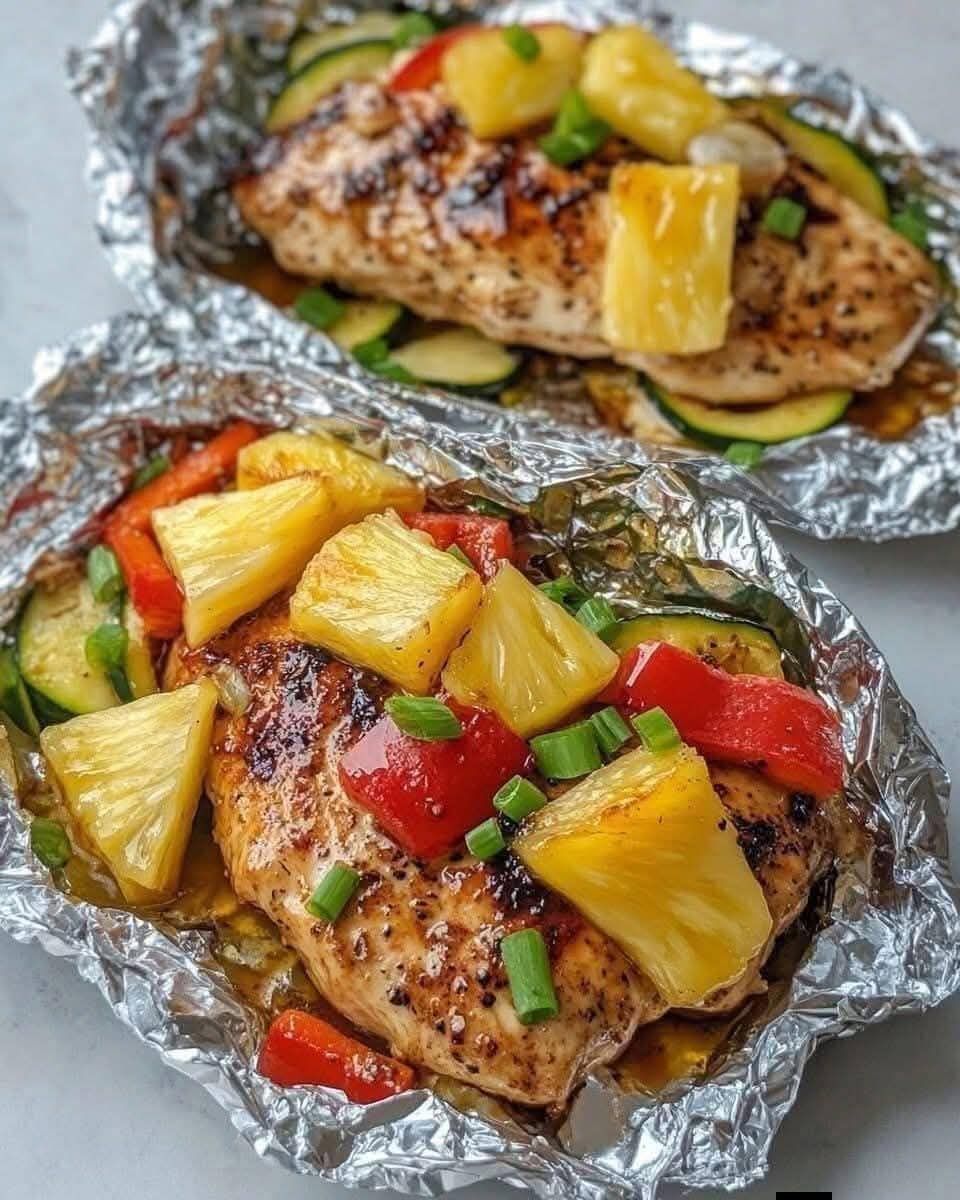
Teriyaki Pineapple Chicken Foil Packets
Teriyaki Pineapple Chicken Foil Packets are a sweet and savory one-pack meal made with juicy chicken breasts, fresh pineapple, colorful vegetables, and a homemade teriyaki glaze, all cooked together in foil for maximum flavor and tenderness.
4
servings30
minutes25
minutes400
kcalIngredients
2 large boneless skinless chicken breasts
1 tablespoon olive oil
1 teaspoon garlic powder
1 teaspoon onion powder
1 teaspoon paprika
Salt to taste
Black pepper to taste
1 cup fresh pineapple chunks
1 zucchini sliced into rounds
1 red bell pepper chopped into chunks
2 green onions sliced
1 small yellow bell pepper chopped
1/2 red onion sliced thinly
Optional: mushrooms, snap peas, broccoli florets, baby corn, carrots, asparagus
- Teriyaki sauce
1/2 cup soy sauce
1/4 cup brown sugar
2 tablespoons honey
2 tablespoons pineapple juice
2 cloves garlic minced
1 teaspoon fresh grated ginger
1 tablespoon rice vinegar
1 teaspoon sesame oil - Cornstarch Slurry
1 teaspoon cornstarch
2 teaspoons water
Directions
- Prepare teriyaki sauce by simmering all sauce ingredients except slurry until sugar dissolves.
- Add cornstarch slurry and cook until sauce thickens and turns glossy.
- Season chicken with oil, spices, salt, and pepper.
- Optional: lightly sear chicken in a pan for extra flavor.
- Prepare vegetables and cut pineapple into chunks.
- Lay foil sheets and grease lightly.
- Add zucchini, chicken, vegetables, and pineapple.
- Pour teriyaki sauce over everything.
- Seal foil packets tightly.
- Bake at 400°F (200°C) for 22–28 minutes OR grill for 15–20 minutes.
Notes
- Fresh pineapple gives best flavor and caramelization.
Do not overfill foil packets to allow proper steaming.
Chicken should reach 165°F (74°C) internal temperature.
Reserve extra sauce for finishing glaze if desired.
Heavy-duty foil is recommended to avoid leaks.
Nutrition Facts
- Calories: 420kcal
- Fat: 12g
- Saturated Fat: 2g
- Sodium: 900mg
- Carbohydrates: 40g
- Fiber: 4g
- Sugar: 18g
- Protein: 38g


