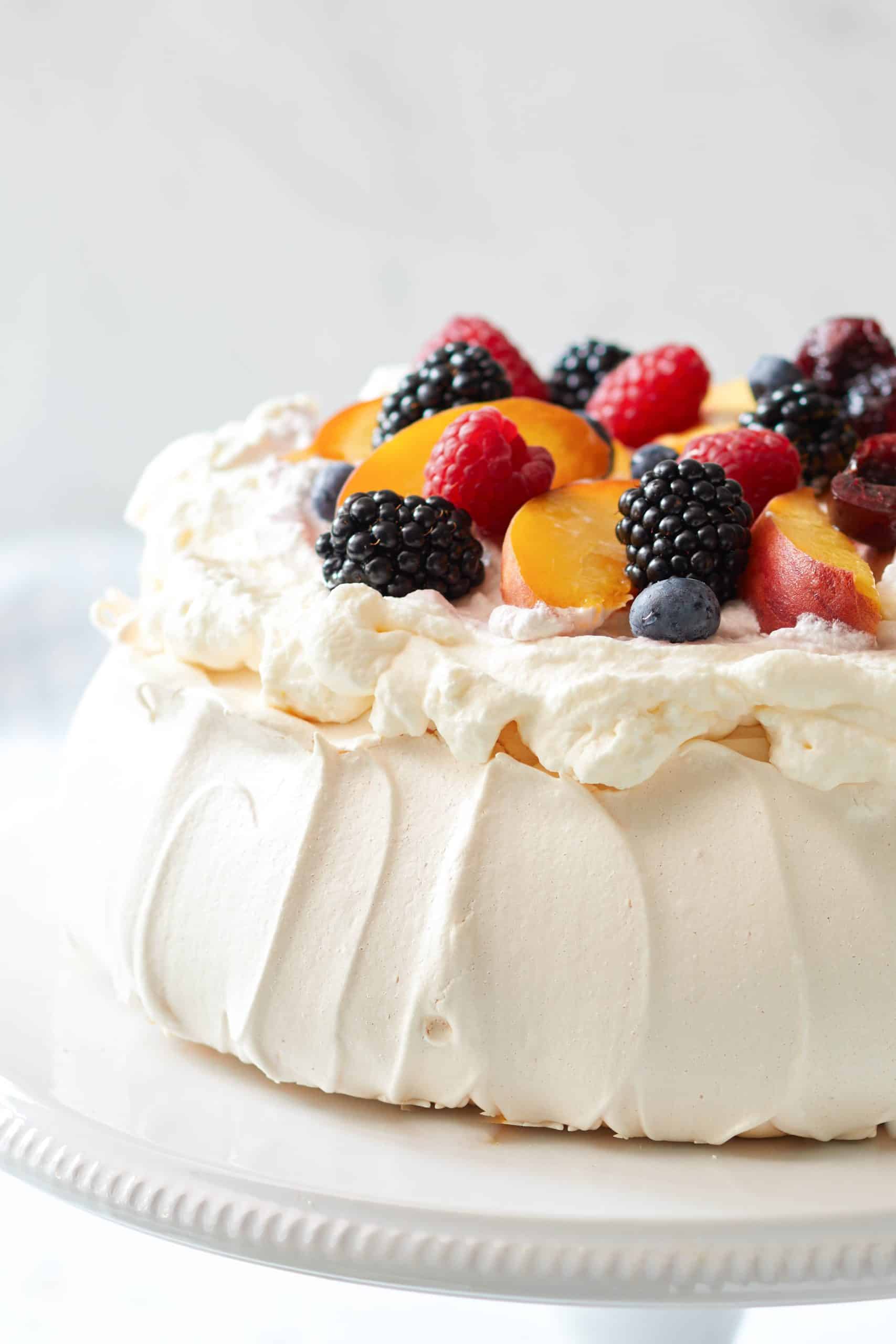
What is Pavlova?
Pavlova is a light meringue dessert made from whipped egg whites and sugar. It is known for its crisp outer shell and soft, marshmallow-like interior, usually topped with whipped cream and fresh fruit.
Ingredients (Serves 4–6)
For the Pavlova Base:
- 4 large egg whites (room temperature)
- 1 cup (200g) caster sugar
- 1 teaspoon white vinegar
- 1 teaspoon cornstarch
- 1 teaspoon vanilla extract
- Pinch of salt
For the Topping:
- 1 cup heavy whipping cream (chilled)
- 2 tablespoons powdered sugar
- Fresh fruits (strawberries, kiwi, mango, blueberries, etc.)
- Optional: passionfruit pulp or chocolate drizzle
Equipment Needed
- Air fryer (basket or oven-style)
- Electric hand mixer or stand mixer
- Parchment paper
- Mixing bowls (clean and grease-free)
Step-by-Step Instructions
1. Prepare the Egg Whites
Ensure your bowl is completely clean and dry.
- Add egg whites and salt to the bowl
- Beat on medium speed until soft peaks form
Soft peaks should gently fold over when the whisk is lifted.
2. Add Sugar Gradually
- Add sugar one tablespoon at a time while beating on high speed
- Continue until stiff, glossy peaks form
The mixture should be smooth and not grainy.
3. Stabilize the Meringue
- Gently fold in vinegar,cornstarch, and vanilla extract
This helps the pavlova maintain structure and achieve a soft center.
4. Shape the Pavlova
- Cut parchment paper to fit your air fryer basket
- Spoon the mixture into a round mound (about 6–7 inches wide)
- Create a slight dip in the center
5. Air Frying the Pavlova
- Preheat air fryer to 120°C (250°F)
- Place the pavlova inside carefully
- Cook for 40–50 minutes
Avoid opening the air fryer during cooking.
6. Cooling Process (Very Important)
- Turn off the air fryer
- Leave the pavlova inside with the door slightly open for at least 1 hour
This prevents cracking and collapse.
Prepare the Toppings
Whipped Cream:
- Beat heavy cream and powdered sugar until soft peaks form
Assemble:
- Place cooled pavlova on a serving plate
- Add whipped cream
- Top with fresh fruits
Expert Tips for Perfect Air Fryer Pavlova
Use room temperature eggs for better volume.
Avoid making pavlova in humid conditions.
Add sugar slowly to ensure stability.
Keep the temperature low to prevent browning or cracking.
Common Mistakes to Avoid
Overbeating egg whites can make them dry and unstable.
Opening the air fryer too often can collapse the meringue.
Using sugar that has not dissolved properly leads to grainy texture.
Skipping the cooling phase can ruin the structure.
Flavor Variations
Chocolate Pavlova: Add 1 tablespoon cocoa powder and chocolate chips.
Coffee Pavlova: Add 1 teaspoon instant coffee powder.
Tropical Pavlova: Use mango, pineapple, and coconut flakes as topping.
Storage Tips
Store the pavlova base in an airtight container for up to 2 days.
Once topped, it is best consumed within a few hours.
Air fryer pavlova recipe,
FAQs
Can I make mini pavlovas in an air fryer?
Yes, reduce cooking time to 20–25 minutes.
Why did my pavlova crack?
Usually due to sudden temperature changes or overcooking.
Can I use an oven instead?
Yes, but the air fryer method is faster and more energy efficient.


