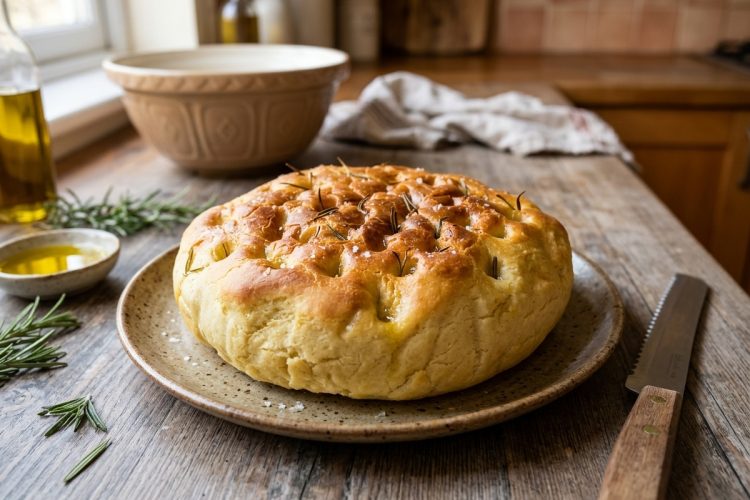
Rosemary Keto Focaccia Bread is a delicious low-carb alternative to traditional Italian focaccia. It combines the familiar flavor of homemade yeast bread with grain-free ingredients to create a soft, chewy texture that works well for breakfast, lunch, dinner, or snacks. Unlike many keto bread recipes that rely heavily on eggs, this focaccia uses a smaller amount of eggs to achieve a more traditional bread-like consistency without an overpowering egg flavor.
Traditional focaccia is an Italian flatbread known for its soft interior, golden surface, and rich savory taste. It is often flavored with olive oil, fresh herbs, and simple seasonings. This keto version takes inspiration from the classic bread while using almond flour, psyllium husk, and other low-carb baking ingredients instead of regular wheat flour. The addition of rosemary gives the bread a pleasant herbal aroma that pairs beautifully with its savory flavor.
One of the best things about homemade keto focaccia is its versatility. You can serve it alongside soups, salads, and main dishes, enjoy it with olive oil and balsamic vinegar, or use it to prepare delicious low-carb sandwiches. It can also serve as a base for pizza-style toppings when you want something different from ordinary keto bread. Its yeast-based preparation helps create a more satisfying texture and flavor than many quick low-carb bread alternatives.
This Keto Focaccia Recipe
A More Traditional Bread Texture
Many low-carb bread recipes have a texture that is noticeably different from conventional bread. Some turn out overly dense, while others have a soft, egg-heavy center or a crumbly structure. This rosemary keto focaccia takes a different approach by using yeast to develop its texture and flavor. The combination of carefully selected grain-free flours and supporting ingredients helps produce a soft, chewy result that feels closer to traditional focaccia.
Made With Yeast for Better Flavor
Yeast plays an important role in this keto focaccia bread recipe. It contributes to the familiar aroma associated with freshly baked bread and helps the dough rise before baking. Rather than depending entirely on baking powder, this recipe uses actual yeast to develop a more recognizable bread flavor. Properly activating the yeast before combining it with the remaining ingredients is an important step for achieving a successful result.
Suitable for Low-Carb Baking
Almond flour and psyllium husk are popular ingredients in keto and gluten-free baking because they provide structure without relying on conventional wheat flour. These ingredients help create a bread alternative that fits into many low-carb meal plans. Since the recipe avoids traditional grain-based flour, it can also be suitable for people looking for grain-free baking options, depending on their individual dietary requirements and the ingredients selected.
Versatile for Different Meals
Rosemary focaccia is not limited to one serving occasion. It can be sliced and served with dinner, used for sandwiches, or offered as a savory appetizer. You can also enjoy a slice with olive oil and balsamic vinegar for a simple snack. Its mild herbal flavor makes it easy to pair with a variety of dishes without overpowering the other ingredients on the table.
Understanding the Main Ingredients
Almond Flour
Superfine almond flour is one of the main ingredients in this keto focaccia recipe. It replaces conventional wheat flour and provides a tender texture with a mild nutty flavor. Using finely ground almond flour is particularly helpful because it creates a smoother dough and a more consistent crumb. Coarse almond meal may produce a heavier texture, so the finer variety is preferable when preparing low-carb yeast bread.
Almond flour also absorbs moisture differently from regular flour. This is one reason accurate measuring is especially important when making keto bread. Too much flour can make the dough excessively dense, while an incorrect balance of wet ingredients can affect the final structure. Measuring almond flour by weight is a reliable way to maintain consistency from one batch to another.
Psyllium Husk
Psyllium husk is an important ingredient in many gluten-free and keto bread recipes. Since this focaccia does not contain traditional wheat gluten, psyllium helps support the structure of the dough. It also contributes to the chewy texture that makes this bread more satisfying than some other low-carb alternatives.
Psyllium absorbs water and forms a gel-like consistency when combined with liquid. This characteristic helps bind the ingredients together and improves the overall texture of grain-free baking. For the best results, use the type and quantity specified in the original ingredient list. Changing the amount can affect the moisture balance and final consistency of the bread.
Xanthan Gum
Xanthan gum is another ingredient used to improve the structure of gluten-free baked goods. In this rosemary keto focaccia, it works alongside almond flour and psyllium husk to help create a cohesive dough. Since grain-free flours do not behave like wheat flour, a binding ingredient can help prevent the finished bread from becoming too crumbly.
For a paleo variation, golden flaxseed meal can be used instead of xanthan gum in the alternative quantity described in the original recipe. However, this substitution produces a slightly denser result. It is important to understand that ingredient substitutions can change the texture, so the original combination is the better choice when you want to follow the standard version.
Active Dry Yeast or Instant Dry Yeast
Yeast is responsible for the characteristic aroma and flavor associated with traditional bread. It helps the dough rise by producing carbon dioxide during fermentation. This is especially valuable in a keto focaccia recipe because grain-free ingredients do not naturally develop the same stretchy structure as wheat-based dough.
The recipe information recommends instant dry yeast for the rise. If using dry active yeast, follow the proofing method described in the preparation instructions. Always check that your yeast is fresh and active before adding it to the dough. Old or inactive yeast may prevent the focaccia from rising properly, resulting in a denser finished loaf.
Baking Powder
A small amount of baking powder provides additional leavening support. While yeast contributes flavor and fermentation, baking powder helps produce a lighter texture during baking. Using both ingredients can be helpful in grain-free bread because almond flour and other keto ingredients behave differently from traditional bread flour.
Rosemary
Rosemary gives this focaccia its recognizable savory character. Its fragrant herbal flavor works especially well with olive oil and makes the bread suitable for serving alongside Mediterranean-inspired meals. Fresh or dried rosemary can provide an aromatic addition, but the original ingredient list should determine which form is used and how much is needed.
How Yeast Helps Keto Focaccia Rise
Yeast fermentation is an important part of making this low-carb focaccia. When yeast becomes active in warm liquid, it begins consuming available sugars and releasing carbon dioxide. These gas bubbles help expand the dough and contribute to its airy structure. Although keto baking does not use traditional wheat flour, yeast can still provide useful fermentation and flavor development when the dough is prepared correctly.
The yeast should be activated using water that feels warm but is not hot. The recommended temperature is approximately 105–110°F. A small amount of maple syrup or honey is included in the proofing process to help feed the yeast. Most of this small quantity is consumed during fermentation, although the exact remaining carbohydrate content depends on the recipe and fermentation process.
Allow the yeast mixture to rest for approximately seven minutes. During this time, it should become foamy, indicating that the yeast is active. If there is no visible activity, the yeast may be expired, the water temperature may have been unsuitable, or the mixture may need to be checked before proceeding. Starting with active yeast is much easier than trying to correct a dough that fails to rise later.
What to Expect From the Texture
Keto focaccia does not behave exactly like conventional Italian focaccia because it does not contain wheat flour, starch, or gluten. Traditional bread develops an elastic network that holds the gas produced by yeast fermentation. Grain-free ingredients provide a different structure, which means the bread may rise differently and settle slightly after baking.
A small amount of sinking after the focaccia comes out of the oven is not necessarily a sign that something has gone wrong. Low-carb flours are often heavier and hold more moisture than conventional flour. Without the same gluten structure found in traditional bread, the finished loaf may not maintain all of its height as it cools.
The interior should still be soft and chewy rather than excessively wet or gummy. This is one of the appealing qualities of this particular style of keto bread. Allow the focaccia to cool appropriately before slicing, since cutting into bread while it is extremely hot can affect its internal texture.
How to Get a Better Golden Exterior
Grain-free bread can retain moisture, which means the outside may not become as crisp as traditional focaccia. This is a natural characteristic of many almond-flour and psyllium-based recipes. If you prefer a slightly firmer exterior, lightly toast individual slices after baking.
Toasting is particularly useful when preparing keto focaccia for sandwiches or serving it with dips. It creates a more noticeable contrast between the soft interior and the firmer outside. Be careful not to over-toast the slices, as grain-free bread can become dry when exposed to too much heat.
Baking Keto Focaccia at High Altitude
Altitude can influence yeast baking because air pressure and moisture conditions change as elevation increases. At higher elevations, dough may rise more quickly, while baked goods can behave differently during the final stages of cooking. This is why the same focaccia recipe may produce slightly different results in different kitchens.
For high-altitude baking, the original method recommends increasing the oven temperature by approximately 25°F. Baking time may also need to be reduced by around five minutes, depending on the oven. These adjustments are starting points rather than universal rules, so watch the bread carefully and make changes according to your equipment.
At lower elevations, the focaccia may retain its height somewhat better after baking. However, a slight amount of settling can still happen because grain-free dough lacks the same structure as conventional bread. The important thing is to focus on the finished texture and avoid assuming that a small decrease in height means the recipe has failed.
Delicious Ways to Serve Rosemary Keto Focaccia
Serve With Olive Oil and Balsamic Vinegar
One of the simplest ways to enjoy rosemary focaccia is with a small dish of olive oil and balsamic vinegar. The savory herbal flavor of the bread pairs naturally with the richness of olive oil and the tangy taste of balsamic. This makes an easy appetizer for family meals or a simple snack when you want something flavorful without preparing a complicated dish.
Make Low-Carb Sandwiches
You can also use sliced focaccia to prepare sandwiches. Add your preferred sandwich fillings and serve it as a satisfying lunch. Its soft, chewy interior works well with a variety of savory ingredients, making it a useful alternative to regular sandwich bread for people following a low-carb eating plan.
Serve Alongside Soups and Salads
Rosemary focaccia is a natural companion for soups and salads. Serve a slice alongside vegetable soup, creamy soup, or a fresh salad to make the meal more filling. Its savory flavor adds another layer to simple dishes without requiring additional preparation.
Create a Pizza-Style Meal
Another option is to use focaccia as a base for a pizza-inspired dish. Add suitable toppings and serve it as a quick savory meal. The bread’s flat shape makes it convenient for experimenting with different combinations while keeping the preparation simple.
Frequently Asked Questions
Is Rosemary Keto Focaccia Bread Gluten-Free?
The described recipe uses grain-free ingredients such as almond flour and psyllium husk rather than conventional wheat flour. These ingredients are naturally gluten-free. However, anyone with celiac disease or gluten sensitivity should check the packaging and manufacturing information for every ingredient to avoid possible cross-contact.
Does Keto Focaccia Taste Like Eggs?
This recipe is designed to avoid the strong egg flavor found in some low-carb bread recipes. It uses a smaller amount of eggs than many traditional keto bread preparations. The yeast, rosemary, and other ingredients help create a more familiar savory bread flavor.
Why Does My Keto Focaccia Sink After Baking?
Some settling is expected because grain-free flours do not contain the same starch and gluten structure as regular bread flour. The dough may rise during fermentation and then lose a little height as it cools. This does not automatically mean the focaccia is undercooked or unsuccessful.
Can I Make This Recipe Without Xanthan Gum?
The original method describes golden flaxseed meal as a possible replacement for xanthan gum when making a paleo variation. It recommends using twice the amount of golden flaxseed meal. Keep in mind that this substitution creates a slightly denser texture, so it may not produce exactly the same result.
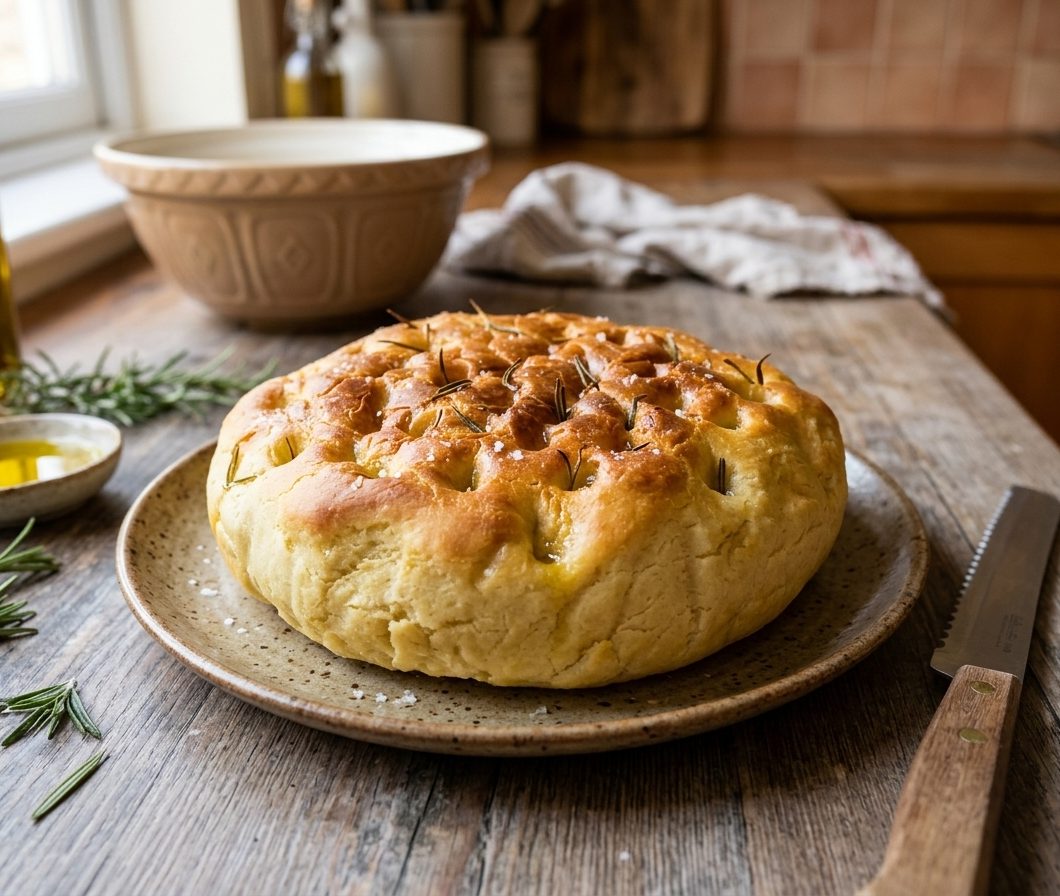
Keto Rosemary Focaccia Bread
A soft, chewy, and flavorful keto focaccia bread made with almond flour and fresh rosemary.
9
slices15
minutes30
minutes125
kcal1
hour1
hour45
minutesIngredients
- For the Dough
Active dry yeast (2 teaspoons)
Maple syrup, inulin, or honey (2 teaspoons, used to activate yeast)
Warm water, 105–110°F (80 ml)
Almond flour (144 grams)
Finely ground psyllium husk (28 grams)
Xanthan gum (1½ teaspoons) or ground flax seeds (1 tablespoon)
Baking powder (1½ teaspoons)
Kosher salt (½ teaspoon)
Whole egg, room temperature (1)
Egg whites, room temperature (2)
Extra virgin olive oil (13 grams)
Apple cider vinegar (2 teaspoons)
- For Topping
Fresh rosemary sprigs
Extra virgin olive oil (for drizzling)
Flaky sea salt
Directions
- In a large bowl, combine the yeast and maple syrup. Pour in warm water (not too hot) and cover. Let it sit for about 7 minutes until bubbly.
- In a separate bowl, whisk together almond flour, psyllium husk, xanthan gum (or flax seeds), baking powder, and salt until well blended.
- Once the yeast mixture is ready, add the egg, egg whites, olive oil, and apple cider vinegar. Mix until light and slightly frothy.
- Gradually add the dry ingredients in two batches, mixing thoroughly until a thick dough forms.
- Line a baking dish or skillet with parchment paper and lightly grease with olive oil.
- Using wet hands or a spatula, spread the dough evenly. Create small indentations across the surface.
- Add rosemary sprigs into the indentations and on top, drizzle with olive oil, and sprinkle flaky sea salt.
- Cover and let the dough rest in a warm place for about 1 hour until slightly puffy.
- Preheat the oven to 350°F (180°C), or 375°F (190°C) if baking at high altitude.
- Bake for 25–30 minutes. After 10 minutes, loosely cover with foil to prevent over-browning.
- Remove from oven and allow to cool completely before slicing for best texture.
Nutrition Facts
- Calories: 125kcal
- Fat: 9g
- Cholesterol: 18mg
- Carbohydrates: 6g
- Sugar: 3g
- Protein: 4g


