Introduction
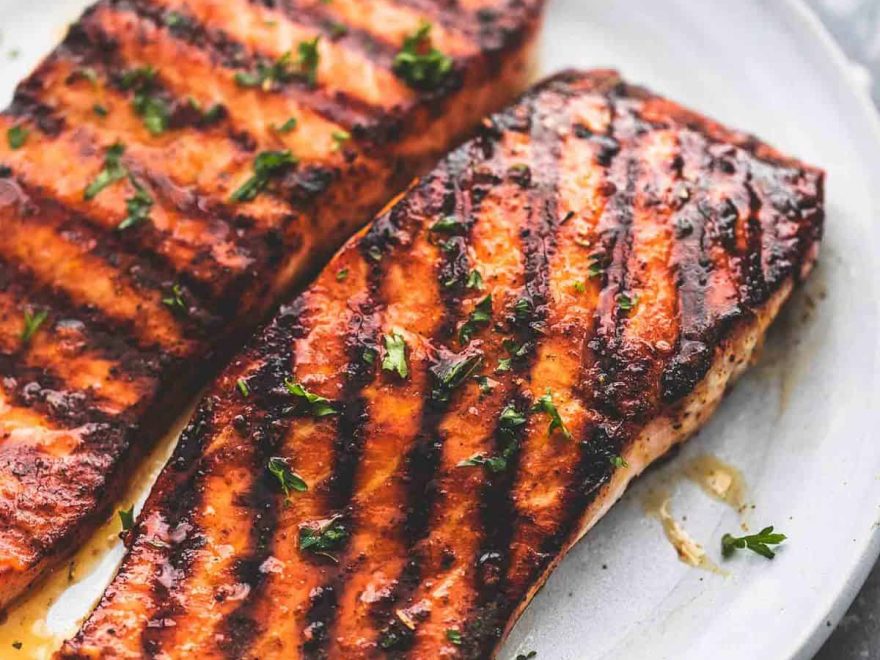
Grilled salmon is one of the healthiest dishes for people with diabetes. It is rich in high-quality protein and omega-3 fatty acids, which help reduce inflammation, support heart health, and improve insulin sensitivity. This recipe avoids sugar, heavy sauces, and refined carbohydrates, making it suitable for blood sugar control while still being flavourful and satisfying.
Ingredients (Serves 2)
Main Ingredients
- Fresh salmon fillets – 2 pieces (120–150 g each, skin on or skinless)
- Olive oil – 1 tablespoon
- Lemon – 1 medium (juice and slices)
- Garlic – 2 cloves, finely minced
- Black pepper – ½ teaspoon
- Salt – ¼ teaspoon (or less, optional)
- Dried oregano or thyme – ½ teaspoon
- Paprika (optional) – ¼ teaspoon
Optional Herbs (Choose any)
- Fresh parsley – finely chopped
- Fresh dill – finely chopped
- Fresh thyme – finely chopped
For Serving (Optional but Recommended)
- Steamed broccoli
- Green beans
- Spinach
- Mixed salad (lettuce, cucumber, tomato)
Preparation Steps
Step 1: Preparing the Salmon
- Remove the salmon fillets from the refrigerator 10–15 minutes before cooking. This helps them cook evenly.
- Rinse gently under cold water and pat dry thoroughly with kitchen paper. Excess moisture can prevent proper grilling.
- Check for any pin bones by running your fingers over the fillet and remove them carefully with tweezers.
Step 2: Making the Marinade
- In a small bowl, add olive oil and fresh lemon juice.
- Add minced garlic, black pepper, salt, dried oregano or thyme, and paprika if using.
- Mix well until fully combined.
Step 3: Marinating the Salmon
- Place the salmon fillets on a plate or shallow dish.
- Brush the marinade evenly over both sides of the salmon.
- Place thin lemon slices on top of the fillets.
- Let the salmon marinate for 15–30 minutes.
Do not marinate longer than 30 minutes, as the lemon juice can start to break down the fish.
Cooking Methods
Method 1: Grilling on a Grill Pan (Recommended)
- Heat a non-stick grill pan over medium heat for 2–3 minutes.
- Lightly brush the pan with a small amount of olive oil to prevent sticking.
- Place the salmon on the pan, skin side down if skin is present.
- Cook for 4–5 minutes without moving the fish. This helps form a nice crust.
- Gently flip the salmon using a spatula.
- Cook the other side for another 3–4 minutes.
- The salmon is done when it flakes easily with a fork and the centre is opaque.
Method 2: Oven Grilled (Alternative)
- Preheat the oven to 200°C (180°C fan).
- Line a baking tray with baking paper or lightly grease it.
- Place the marinated salmon on the tray.
- Grill (broil) for 10–12 minutes, depending on thickness.
- Do not overcook; salmon should remain moist inside.
Serving Suggestions
- Serve the grilled salmon hot with steamed green vegetables.
- Add a fresh salad dressed with lemon juice and a small amount of olive oil.
- Avoid creamy sauces, butter sauces, or sweet glazes.
- If carbohydrates are needed, add a small portion of quinoa or brown rice.
Nutritional Benefits (Approximate per Serving)
- High protein: Helps control hunger and stabilise blood sugar
- Omega-3 fats: Supports heart health and reduces diabetes complications
- Low carbohydrates: Minimal impact on blood glucose
- No added sugar: Safe for diabetic meal plans
Important Tips for Diabetic Patients
- Always control portion size (120–150 g salmon is ideal).
- Avoid frying or deep frying.
- Avoid honey, sugar, or sweet marinades.
- Pair with fibre-rich vegetables to prevent blood sugar spikes.
- Limit salt if you have high blood pressure.
