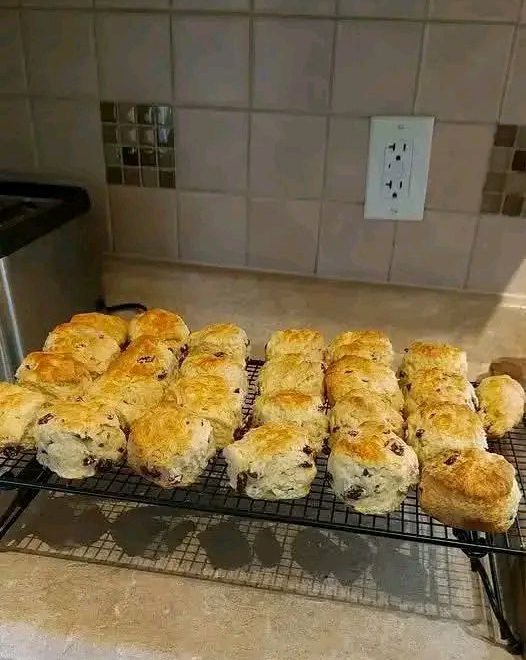
Fruit scones are one of the simplest baked goods in terms of ingredients, yet one of the easiest to get wrong. They sit at the intersection of bread and cake, requiring restraint rather than effort. When done correctly, a fruit scone is tender, lightly crumbly, gently sweet, and sturdy enough to hold butter or jam without collapsing.
This recipe focuses on why each step matters, not just how to do it. It is written to be read slowly, understood fully, and followed confidently.
WHAT A FRUIT SCONE SHOULD BE (IMPORTANT CONTEXT)
A proper fruit scone is:
- not fluffy like cake
- not chewy like bread
- not dry or crumbly to the point of falling apart
Instead, it should have:
- a soft, steamy interior
- visible layers from cold butter
- evenly distributed fruit
- a lightly crisp, golden exterior
Achieving this comes down to temperature, speed, and minimal handling.
TIME, YIELD, AND EXPECTATIONS
Preparation time: 10–12 minutes
Baking time: 12–15 minutes
Cooling time: 5 minutes
Total time before eating: about 30 minutes
Yield: 6–8 medium scones
INGREDIENTS
Dry Ingredients
- 250 g all-purpose flour (2 cups)
- 50 g granulated sugar (¼ cup)
- 2 teaspoons baking powder
- ¼ teaspoon fine salt
Fat
- 60 g cold unsalted butter, cut into small cubes (¼ cup)
Liquid
- 120 ml cold milk (½ cup)
Fruit
- 100 g dried fruit (¾ cup)
raisins, sultanas, currants, or dried cranberries
Optional additions:
- 1 teaspoon vanilla extract
- Zest of 1 lemon or orange
- Extra milk or egg for brushing tops
INGREDIENT EXPLANATION (WHY EACH ONE MATTERS)
Flour provides structure. All-purpose flour is ideal because it balances tenderness and strength.
Sugar is kept low. Scones are not meant to be sweet cakes. Too much sugar weakens structure and causes burning.
Baking powder is the sole leavening agent. It must be fresh. Old baking powder equals flat scones.
Butter must be cold. Cold butter creates steam during baking, forming layers. Warm butter absorbs into the flour and ruins texture.
Milk hydrates the dough. Cold milk keeps the butter solid for longer.
Dried fruit should be evenly sized. Large pieces sink and tear the dough.
STEP 1: OVEN AND PREPARATION
Preheat oven to 220°C (425°F).
High heat is essential. Scones need a fast rise before the butter melts completely.
Line a baking tray with parchment paper.
STEP 2: MIX DRY INGREDIENTS
In a large bowl, combine:
- flour
- sugar
- baking powder
- salt
Whisk briefly to distribute everything evenly.
This prevents uneven rise and salty pockets.
STEP 3: CUT IN THE BUTTER
Add cold butter cubes to the flour mixture.
Using fingertips, rub butter into the flour until the mixture resembles coarse crumbs with visible pea-sized butter pieces.
Do not overwork. This step should take no more than 2 minutes.
The butter should remain cold. If your hands are warm, work quickly or chill briefly.
STEP 4: ADD THE FRUIT
Add dried fruit (and zest if using).
Toss gently to coat fruit in flour. This prevents clumping and sinking during baking.
STEP 5: ADD THE LIQUID
Pour in cold milk (and vanilla if using).
Mix gently with a fork or spoon just until the dough comes together.
The dough should look rough and slightly shaggy. If it looks smooth, it has been overmixed.
If dry patches remain, add 1 tablespoon milk only.
STEP 6: SHAPE THE DOUGH
Turn dough onto a lightly floured surface.
Bring it together gently with your hands. Do not knead.
Pat into a round about 2–2.5 cm thick.
Thickness matters. Too thin leads to dry scones. Too thick leads to underbaked centers.
STEP 7: CUT THE SCONES
Cut into:
- 6 large wedges, or
- 8 smaller wedges, or
- rounds using a cutter (press straight down, do not twist)
Place on baking tray with space between them.
Brush tops lightly with milk or egg wash if desired.
STEP 8: BAKE
Bake at 220°C (425°F) for 12–15 minutes.
The scones are ready when:
- tops are golden
- sides look set
- bottoms are lightly browned
Do not overbake. Pale scones are better than dry ones.
COOLING AND SERVING
Cool on tray for 5 minutes.
Serve warm with:
- butter
- jam
- clotted cream or whipped cream
Scones are best eaten the same day.
TEXTURE AND FLAVOR PROFILE
- Crumb: tender, slightly flaky
- Sweetness: mild and balanced
- Fruit: evenly distributed, plump
- Exterior: lightly crisp, not hard
CALORIES (APPROXIMATE)
Per scone (1 of 8):
- Calories: 210–230 kcal
- Fat: 8 g
- Carbohydrates: 32 g
- Sugar: 10 g
- Protein: 4 g
COMMON MISTAKES AND WHY THEY HAPPEN
Overmixing creates gluten and makes scones tough.
Warm butter removes flakiness.
Low oven temperature causes spreading and dryness.
Too much liquid creates dense interiors.
Twisting cutters seals edges and prevents rise.
FREQUENTLY ASKED QUESTIONS
Can I use fresh fruit?
Fresh fruit releases moisture and shortens shelf life. Dried fruit is traditional and more reliable.
Can I freeze the dough?
Yes. Freeze cut scones unbaked. Bake from frozen, adding 3 minutes.
Can I use self-rising flour?
Yes. Omit baking powder and salt.
Why did my scones spread?
Butter too warm or dough too wet.
Are scones supposed to be crumbly?
They should break cleanly, not crumble into sand.
