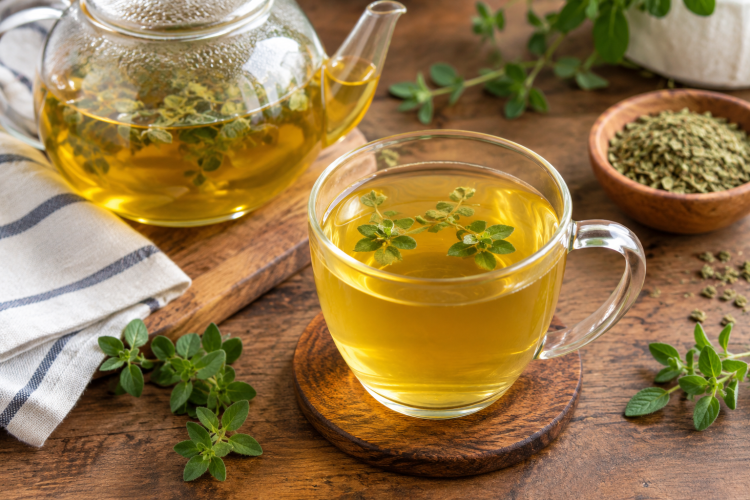
Oregano tea is a simple herbal drink that can be made with either fresh oregano or dried oregano. It takes only a few basic ingredients and a little time to prepare. The finished tea has a warm, earthy flavor with slightly peppery herbal notes. It can be served warm in a cup or cooled and poured over ice for a refreshing drink.
The basic method is simple. Fresh water is heated until it reaches a gentle boil, then the oregano is added after the water is removed from the heat. The tea is covered and left to steep until it reaches the desired strength. After steeping, the oregano is strained out and the tea is ready to serve.
One useful thing about making oregano tea at home is that the strength can easily be adjusted. A shorter steeping time creates a lighter infusion, while a longer steep produces a deeper herbal flavor. The amount of oregano can also be changed depending on how strong you want the tea to taste.
Fresh or Dried Oregano?
- Both fresh and dried oregano can be used for this recipe. The choice mainly depends on what is available and the type of flavor you prefer.
- Fresh oregano gives the tea a lighter and greener herbal flavor. The leaves should look fresh and firm, without obvious yellowing, dark spots, or signs of wilting. Before using fresh oregano, rinse the leaves well under cool running water to remove any dirt. Pat them dry and remove the thicker stems before lightly chopping the leaves.
- Dried oregano has a stronger and more concentrated flavor. Since the leaves lose moisture during drying, their herbal character becomes more pronounced. Before using dried oregano, check that it still has a noticeable herbal aroma. If it smells stale or musty, it is better to use a fresher supply.
- For storage, dried oregano should be kept in a tightly sealed container away from heat, moisture, and direct sunlight. Proper storage helps the herb retain its aroma and flavor
Ingredients for Oregano Tea
- The basic tea needs only two main ingredients:
- 2 tablespoons dried oregano leaves
- 2 cups (500 ml) fresh water
- Fresh oregano can be used instead of dried oregano. For the fresh version, use:
- 4 tablespoons fresh oregano leaves, lightly chopped
- There are also several optional ingredients that can be used to change the flavor:
- 1 teaspoon honey
- 1 teaspoon lemon juice
- 1 small cinnamon stick
- 2 thin slices fresh ginger
- A few fresh mint leaves
- A small piece of orange peel
- These additions are optional and do not need to be used all together. The plain oregano tea can be served on its own, or one or more of these ingredients can be added according to taste.
How Much Oregano Should You Use?
- The amount of oregano determines how strong the tea will be.
- For 2 cups of water, use 1 tablespoon of dried oregano for a mild tea. This produces a lighter herbal flavor and is a good choice if you prefer a less concentrated drink.
- For a medium-strength tea, use 2 tablespoons of dried oregano. This is the main amount used in the recipe and gives the tea a noticeable oregano flavor without making it unnecessarily strong.
- For a stronger herbal infusion, use up to 3 tablespoons of dried oregano.
- If using fresh oregano, use 4 tablespoons of lightly chopped fresh leaves in place of the dried oregano.
- The steeping time can also be adjusted along with the amount of oregano. Using a moderate amount of oregano and tasting the tea after brewing makes it easier to decide whether the next batch should be lighter or stronger.
Preparing the Oregano
- If using fresh oregano, start by rinsing the leaves thoroughly under cool running water. Gently pat them dry with a clean kitchen towel or paper towel.
- Remove any thicker stems because the leaves are the main part needed for the tea. Once the stems are removed, lightly chop the oregano leaves.
- There is no need to chop the leaves very finely. A rough chop is enough to help release their aroma when they come into contact with the hot water.
- If using dried oregano, there is no preparation required. Simply measure the required amount and keep it ready before heating the water.
Heating the Water
- Measure 2 cups (500 ml) of fresh water and pour it into a small saucepan or kettle.
- Place the saucepan over medium-high heat and bring the water to a gentle boil. The water does not need to be kept at a vigorous rolling boil.
- The oregano should be added after the water has been removed from the heat. There is no need to boil the oregano directly.
- The oregano should be added after the water has been removed from the heat. There is no need to boil the oregano directly.
- Once the water is off the heat, add the measured oregano.
- For dried oregano, sprinkle the leaves directly into the hot water.
- For fresh oregano, add the lightly chopped leaves to the hot water.
- The oregano will begin releasing its aroma as soon as it comes into contact with the hot water. Since the water is already hot, there is no need to return the saucepan to the stove.
- Keeping the heat off during this stage helps produce a smoother herbal infusion without continuing to cook the oregano.
Adding the Oregano
- Once the water is off the heat, add the measured oregano.
- For dried oregano, sprinkle the leaves directly into the hot water.
- For fresh oregano, add the lightly chopped leaves to the hot water.
- The oregano will begin releasing its aroma as soon as it comes into contact with the hot water. Since the water is already hot, there is no need to return the saucepan to the stove.
- Keeping the heat off during this stage helps produce a smoother herbal infusion without continuing to cook the oregano.
Covering the Tea
- After adding the oregano, cover the saucepan or transfer the mixture to a heatproof teapot and cover it with a lid.
- Covering the tea while it steeps is a simple step, but it helps retain the herbal aroma. Leaving the container uncovered allows some of the aroma to escape with the steam.
- Once covered, leave the tea undisturbed until it reaches the desired steeping time.
Choosing the Right Steeping Time
The steeping time has a noticeable effect on the strength and flavor of oregano tea.
- Mild Oregano Tea
- For a lighter cup, steep the oregano for about 5 minutes.
- This produces a delicate herbal infusion with a less pronounced oregano flavor.
- Medium-Strength Oregano Tea
- For a balanced everyday cup, steep the tea for about 10 minutes.
- This allows the oregano enough time to release its herbal flavor without making the infusion overly intense.
Strong Oregano Tea
- For a deeper herbal flavor, steep the tea for about 15 minutes.
- The longer steeping time produces a stronger infusion with a more noticeable oregano aroma and flavor.
- There is no need to keep steeping the tea far beyond this point. If the finished tea is stronger than preferred, reduce the steeping time or amount of oregano the next time you prepare it.
Straining the Tea
- Once the tea has finished steeping, it is time to remove the oregano leaves.
- Place a fine mesh strainer over a heatproof teapot, jug, or serving cups. Slowly pour the tea through the strainer.
- The strainer will catch the oregano leaves while allowing the infused liquid to pass through.
- Fresh oregano may leave a few small pieces behind, which is why a fine mesh strainer works well for this recipe. Allow the tea to drain naturally rather than pressing the leaves firmly into the strainer.
- Once all the liquid has passed through, discard the used oregano leaves or add them to a compost bin if appropriate.
- The strained tea should have a light golden-green to soft amber appearance depending on the oregano used and the amount of time it was steeped.
Adding Honey
- Honey can be added after the tea has been strained.
- Use 1 teaspoon of honey and stir it into the warm tea until it dissolves.
- Honey adds gentle sweetness and can soften the naturally strong herbal flavor of oregano.
- If you prefer unsweetened herbal tea, simply leave the honey out.
Adding Ginger
- Fresh ginger adds a mild warmth to the tea.
- Use 2 thin slices of fresh ginger and add them while the oregano is steeping. The ginger will gradually release its flavor into the hot water.
- The amount is small enough to complement the oregano without taking over the drink.
Adding Cinnamon
- For a warmer, cozier flavor, add 1 small cinnamon stick during the steeping stage.
- The cinnamon gives the tea a subtle spice aroma that pairs well with the herbal character of oregano.
- Remove the cinnamon stick before serving.
Adding Mint
- A few fresh mint leaves can be used to give oregano tea a fresher finish.
- The mint can be added after straining and allowed to sit briefly in the hot tea. It can also be added during the final part of the steeping process.
- Because mint has a fresh and noticeable flavor, only a few leaves are needed.
Adding Orange Peel
- A small piece of orange peel adds a delicate citrus aroma.
- Add the orange peel while the oregano is steeping, then remove it before serving if desired.
- Only a small piece is necessary because orange peel contains naturally aromatic oils that can become noticeable quickly.
Serving Oregano Tea Warm
- After straining and adding any optional flavorings, pour the tea into two serving cups.
- Oregano tea can be served warm immediately. If it is too hot, allow it to cool for a minute or two before drinking.
- The warm tea has a noticeable herbal aroma, particularly while steam is rising from the cup.
- For a simple version, serve it plain. For a slightly sweeter drink, add honey. Lemon can be used for a brighter flavor, while ginger, cinnamon, mint, or orange peel can provide additional aroma.
Making Iced Oregano Tea
- Oregano tea can also be served cold.
- Prepare the tea using the same basic method and allow the oregano to steep for the desired amount of time. Strain the tea once it is ready and let it cool completely at room temperature.
- Transfer the cooled tea to a clean container, cover it, and refrigerate it for 1 to 2 hours.
- When ready to serve, fill a glass with ice cubes and pour the chilled oregano tea over the ice.
- A few lemon slices can be added if desired.
- The chilled version has the same herbal character as the warm tea but provides a lighter and more refreshing way to serve it.
How to Get the Best Flavor
- A few small details can make the preparation easier and help maintain the flavor of the finished tea.
- Always start with fresh water. Measure the oregano rather than adding an unknown amount. This makes it easier to repeat the same strength later.
- Remove the water from the heat before adding the oregano. There is no need to continue boiling after the herb has been added.
- Keep the tea covered during steeping. This helps retain its natural herbal aroma.
- Use a fine mesh strainer to remove the leaves before serving. This is especially helpful when using dried oregano because the smaller pieces can otherwise remain in the drink.
- Taste the tea before adding honey or other flavorings. This makes it easier to decide which additions are needed.
Common Preparation Mistakes
- Boiling the Oregano
- One common mistake is leaving the oregano on the heat and boiling it for several minutes.
- For this recipe, the water should be brought to a gentle boil first. The oregano is then added after the water has been removed from the heat.
- Steeping for Too Long
- Steeping for an excessively long time can result in a very intense herbal flavor.
- For most preparations, 5 to 15 minutes is enough. Choose the shorter end of the range for a mild tea and the longer end for a stronger infusion.
- Using Old Oregano
- The quality of the herb affects the final taste.
- Fresh oregano should have a fresh appearance and noticeable aroma. Dried oregano should also smell distinctly herbal. If the aroma has faded considerably, the finished tea may have a weaker flavor.
- Leaving the Tea Uncovered
- The tea should remain covered while it steeps.
- An uncovered saucepan allows steam to escape freely, taking some of the herbal aroma with it. Covering the tea helps keep more of that aroma in the infusion.
- Storing Leftover Oregano Tea
- If there is tea left after serving, allow it to cool before transferring it to a clean glass container with a lid.
- Refrigerate the tea promptly.
- For the freshest flavor, use the refrigerated tea within 24 to 48 hours.
- Some natural herbal particles may settle at the bottom of the container during storage. This is normal for an herbal infusion. Gently stir or shake the container before serving.
- Avoid leaving brewed tea at room temperature for an extended period.
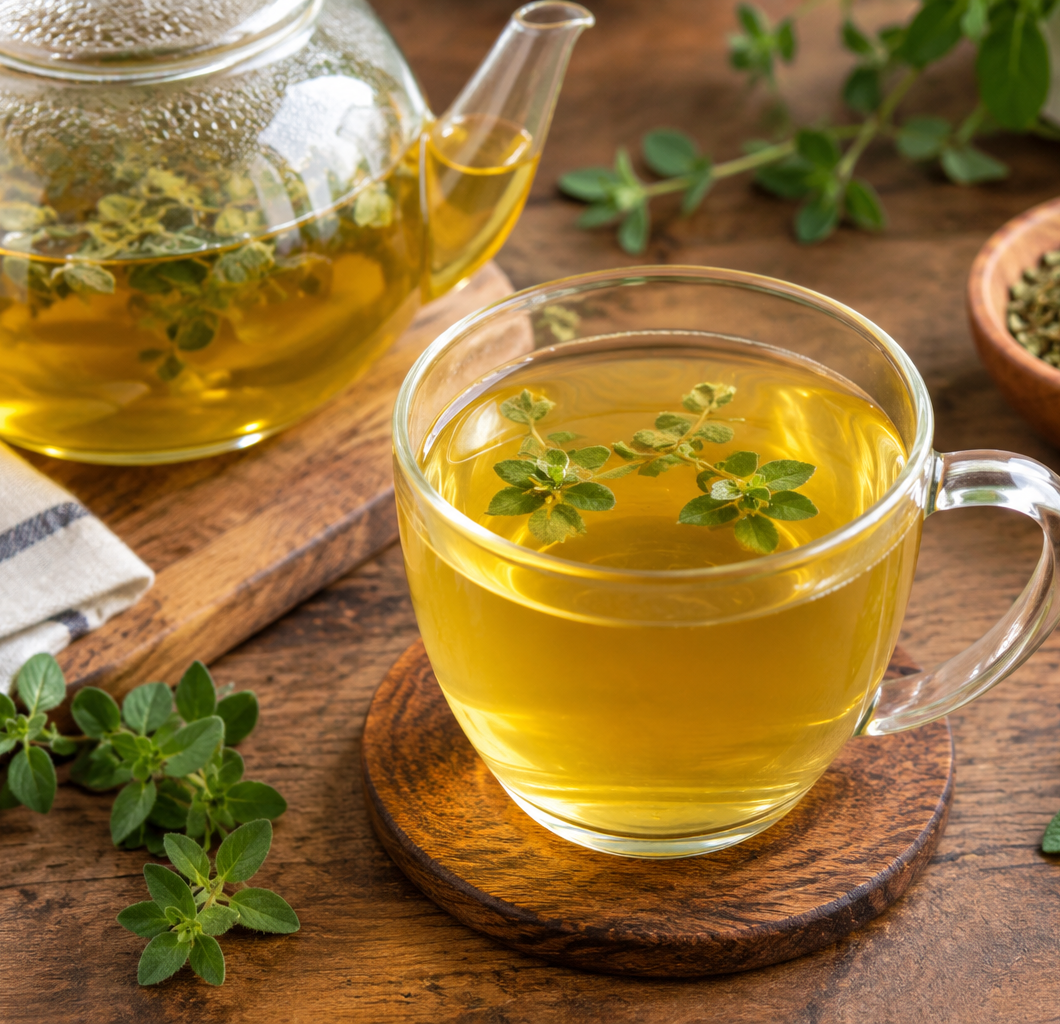
Oregano Leaf Herbal Tea
 Recipe by admin1
A simple herbal tea made with fresh or dried oregano and hot water. It has a warm, earthy, slightly peppery flavor and can be served plain or customized with honey, lemon, ginger, cinnamon, mint, or orange peel. Serve it warm or chill it and pour over ic
2
servings5
minutes15
minutes2
kcal20
minutesIngredients
2 tablespoons dried oregano leaves
2 cups (500 ml) fresh water
4 tablespoons fresh oregano leaves, lightly chopped
1 teaspoon honey
1 teaspoon lemon juice
1 small cinnamon stick
2 thin slices fresh ginger
A few fresh mint leaves
A small piece of orange peel
Directions
- If using fresh oregano, rinse the leaves under cool running water and pat them dry. Remove the tough stems and lightly chop the leaves.
- Pour 2 cups (500 ml) of fresh water into a small saucepan or kettle.
- Bring the water to a gentle boil, then remove it from the heat.
- Add the oregano leaves. Use 1 tablespoon dried oregano for a mild tea, 2 tablespoons for medium strength, or up to 3 tablespoons for a stronger tea
- Cover the saucepan or teapot and steep for 5 minutes for mild tea, 10 minutes for medium tea, or 15 minutes for strong tea.
- Strain the tea through a fine mesh strainer into serving cups or a heatproof container.
- Stir in honey or lemon juice after straining, if desired.
- For additional flavor, add the cinnamon stick, ginger slices, mint leaves, or orange peel during steeping according to preference.
- Serve warm. For iced oregano tea, allow the strained tea to cool completely, refrigerate for 1 to 2 hours, and serve over ice.
Notes
- Fresh oregano gives the tea a lighter, greener flavor.
- Dried oregano produces a stronger, more concentrated herbal flavor.
- Do not boil the oregano after adding it to the water.
- Keep the tea covered while steeping to help retain its aroma.
- Adjust the amount of oregano or steeping time to suit your preferred strength.
- Refrigerate leftover tea in a clean covered container and use within 24 to 48 hours.
- Honey, lemon, ginger, cinnamon, mint, and orange peel are optional.
Nutrition Facts
- Total number of serves: 2
- Calories: 2kcal
- Fat: 0.1g
- Sodium: -5mg
- Carbohydrates: 04g
- Fiber: 0.2g
- Sugar: 0g
- Protein: 0.1g


