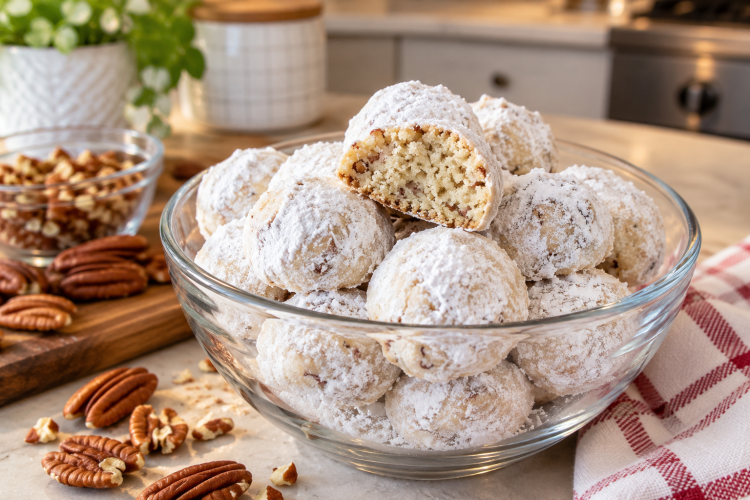
Keto pecan snowball cookies are a delicious choice for anyone looking for a low-carb dessert that delivers the rich, buttery taste of traditional snowball cookies without regular powdered sugar or wheat flour. Made with superfine almond flour, coconut flour, butter, finely chopped pecans, and sugar-free sweetener, these little cookies have a tender texture with a delicate crunch from the nuts. Their round shape and snowy coating make them especially attractive for holiday celebrations, Christmas cookie trays, afternoon snacks, and homemade edible gifts.
One of the best things about this keto snowball cookie recipe is its simple ingredient list. You do not need eggs, complicated baking techniques, or specialty equipment beyond a mixer and a baking sheet. The dough comes together with a handful of familiar ingredients, and chilling it before baking helps the cookies hold their shape. Once baked and cooled, each cookie is rolled in sugar-free confectioners’ sweetener to create the classic white finish associated with traditional Mexican wedding cookies, Russian tea cakes, and pecan snowballs.
These sugar-free pecan snowball cookies are also suitable for preparing ahead of time. Since the dough needs to chill before baking, you can organize your baking schedule around that resting period. You can even prepare the cookie balls in advance and freeze them before baking, making it easier to enjoy freshly baked cookies whenever you want. Whether you are following a ketogenic lifestyle, reducing your sugar intake, or simply searching for a nutty and buttery homemade treat, these cookies offer a satisfying alternative to conventional flour-based desserts.
What Makes Keto Pecan Snowball Cookies Special?
A Classic Cookie With a Low-Carb Twist
Traditional snowball cookies are commonly prepared with flour, butter, nuts, and powdered sugar. Although their ingredient combinations vary between families and regions, they generally share a soft, crumbly texture and a generous coating of sugar. This keto version changes the flour and sweetener choices while preserving the familiar qualities that make snowball cookies so appealing. Almond flour replaces conventional wheat flour, coconut flour helps bind the mixture, and sugar-free sweetener provides sweetness without adding ordinary table sugar.
The result is a small, rich cookie with a delicate bite and a pleasantly nutty flavor. Butter gives the dough its creamy taste, while finely chopped pecans add texture throughout each cookie. Vanilla extract enhances the overall flavor, and a little sea salt balances the sweetness. Once the cookies are finished with sugar-free powdered sweetener, they look much like traditional snowball cookies, making them a lovely addition to a festive dessert table.
A Convenient Egg-Free Baking Recipe
Another advantage of these keto cookies is that they do not require eggs. Many traditional cookie recipes depend on eggs for moisture, binding, and structure, but this recipe uses the combination of butter, almond flour, and coconut flour to create a workable dough. This makes the preparation straightforward and eliminates the need to crack eggs or separate yolks and whites.
Because there are no eggs, the dough’s consistency becomes particularly important. The ingredients must be combined thoroughly, and the dough needs sufficient chilling time to firm up before shaping and baking. When prepared correctly, the cookie balls can be handled easily and should retain their shape in the oven. This egg-free structure also contributes to the tender, crumbly quality that makes pecan snowball cookies distinctive.
Ingredients for Keto Pecan Snowball Cookies
Unsalted Butter
Butter is the foundation of these low-carb snowball cookies, providing richness, moisture, and the familiar flavor associated with classic butter cookies. Softened butter blends more evenly with the dry ingredients than cold butter straight from the refrigerator. It should be soft enough to mix easily but not melted, because melted butter can change the consistency of the dough and make it harder to shape.
The recipe also allows ghee as an alternative. If you choose ghee, make sure it is softened rather than liquid. Coconut oil is another possible variation mentioned for this style of cookie, although it can affect the finished flavor and texture. For the most direct match to the original recipe, use the specified amount of softened unsalted butter.
Superfine Almond Flour
Superfine almond flour gives these keto pecan cookies their main structure. It is made from finely ground almonds and is widely used in ketogenic baking because it contains fewer digestible carbohydrates than conventional wheat flour. Its fine texture helps create cookies that are delicate rather than heavy or grainy.
Choosing a superfine variety is important because coarser almond meal may produce a different texture. Almond flour brands also vary in how much moisture they absorb, so the dough may feel slightly different depending on the product you use. If it is too crumbly to shape, a small amount of additional softened butter can help bring it together. If it is unusually sticky, a little extra almond flour may improve its consistency. Make any adjustments gradually rather than adding a large amount at once.
Coconut Flour
Coconut flour works alongside almond flour to help the dough hold together without eggs. It also contributes a mild natural sweetness that complements the buttery flavor and pecans. Although it may seem like a small ingredient in this recipe, coconut flour is highly absorbent, so its quantity has a significant effect on the finished dough.
It is best not to substitute coconut flour directly with another flour using the same measurement. Coconut flour absorbs considerably more moisture than many other baking flours, and replacing it can make the dough too dry or too soft. For dependable results, keep the specified two tablespoons and combine them thoroughly with the almond flour before shaping the cookies.
Sugar-Free Granulated Sweetener
Sugar-free granulated sweetener gives the cookies their sweetness while keeping the recipe aligned with a low-carb eating plan. The original recipe uses Truvia, but other suitable granulated sugar substitutes, such as Swerve or monk fruit sweetener blends, may also work. Different sweeteners can vary in sweetness, texture, and how they behave during baking, so use a product you already know and enjoy.
For the best consistency, use a granulated sweetener in the dough rather than automatically replacing it with powdered sweetener. The recipe also calls for a separate sugar-free confectioners’ sweetener for the final coating. These two ingredients serve different purposes: the granulated version sweetens the cookie mixture, while the powdered version creates the characteristic snowy exterior.
Raw Pecans
Pecans bring the signature nutty flavor to these keto snowball cookies. Their naturally rich taste pairs beautifully with butter and vanilla, while their texture provides a gentle crunch within the soft cookie. Raw pecans are specified in the ingredient list, so there is no need to roast them before adding them to the dough.
Chop the pecans finely to distribute them evenly throughout the mixture. Large pieces can make small cookies more difficult to shape and may cause the dough balls to break apart. Fine chopping allows each bite to contain a little pecan without overwhelming the delicate cookie structure. If you enjoy pecans, resist the temptation to leave them out, because they are an important part of the recipe’s flavor and identity.
Vanilla Extract and Sea Salt
Pure vanilla extract rounds out the flavor of the cookies, giving them a warm aroma that complements the butter and pecans. A small amount is enough to enhance the sweetness without overpowering the other ingredients. If vanilla extract is unavailable, it can be omitted, or the original recipe suggests using one-quarter teaspoon of almond extract as a flavor variation.
Sea salt is equally important, even though the quantity is small. It balances the sweetener and highlights the richness of the butter and nuts. Without salt, the cookies may taste flatter or less complex. Measure it carefully so that the finished cookies retain a pleasant balance between sweet, buttery, and nutty flavors.
Sugar-Free Confectioners’ Sweetener
The final coating gives these cookies their recognizable snowball appearance. Sugar-free confectioners’ sweetener has a fine, powdery consistency that clings to the cooled cookie surface. Products such as powdered Truvia or Swerve can be suitable choices, depending on your preferences and availability.
Do not rush this finishing step. The cookies need to cool until they are firm before you roll them in the powdered sweetener. If they are still very warm, the coating may absorb moisture and lose its clean, snowy appearance. Once the cookies have cooled properly, gently roll each one until it is lightly covered on all sides.
How to Make Keto Pecan Snowball Cookies
Step 1: Combine the Ingredients
Begin by adding the softened butter, superfine almond flour, coconut flour, sugar-free granulated sweetener, finely chopped pecans, vanilla extract, and sea salt to the bowl of a stand mixer. Beat the ingredients at medium speed until they are evenly combined and form a cohesive cookie dough. Stop occasionally to scrape down the sides of the bowl if flour or butter collects around the edges.
The dough should be thick enough to shape after chilling. Because almond flour brands vary in absorbency, do not worry if the mixture initially looks slightly different from another batch you have made. Focus on thorough mixing and an even distribution of pecans. Avoid adding unnecessary liquid, since the recipe is designed around the moisture supplied by the softened butter.
Step 2: Refrigerate the Cookie Dough
Once the ingredients are combined, cover the dough and refrigerate it for two hours. This resting period allows the butter to firm up and makes the mixture easier to handle. Chilling also helps the shaped cookies maintain their round form during baking, which is particularly useful for delicate almond flour cookies.
Although refrigeration requires some planning, it is an important part of this recipe. If you skip it, the dough may be too soft to shape neatly, especially in a warm kitchen. Use the chilling time to prepare your baking sheet, arrange the parchment paper, and measure the sugar-free powdered sweetener for the finishing step.
Step 3: Shape the Cookie Balls
After chilling, remove the dough from the refrigerator and divide it into small portions. Roll each portion gently between your hands to create balls measuring approximately one to one-and-a-half inches in diameter. Aim for similar sizes so that the cookies bake at roughly the same rate.
Arrange the dough balls on a baking sheet lined with parchment paper. Leave a little space between them, even though they are not intended to spread like ordinary drop cookies. If the dough begins to soften while you work, return it to the refrigerator briefly before continuing. Gentle handling helps prevent cracks and keeps the cookies looking neat.
Step 4: Freeze the Shaped Dough
Place the baking sheet containing the cookie balls in the freezer for 15 minutes. This additional chilling step firms the dough after shaping and helps the cookies retain their round appearance in the oven. It is especially useful when preparing these cookies ahead of time or when working in a warm kitchen.
You can use this stage to preheat your oven and prepare the cooling area. If you want to make the cookies in advance, the shaped dough balls can also be frozen for later baking. For the best results, keep them covered during longer storage to protect them from freezer odors and drying. If baking from frozen, allow for the possibility of a different baking time and check the cookies carefully for doneness.
Step 5: Preheat the Oven
Preheat the oven to 350°F (approximately 177°C). Make sure the oven has reached the correct temperature before placing the chilled dough inside. A properly heated oven encourages more consistent baking and helps the cookies develop a lightly golden exterior without becoming overly dark.
Keep the parchment-lined baking sheet ready so you can transfer the chilled dough balls directly into the oven. If you are baking several batches, allow the oven to return to the correct temperature between batches. Consistent temperature is especially helpful when baking small, butter-rich cookies that can become dry if left in the oven too long.
Step 6: Bake Until Lightly Golden
Bake the cookies for 12 to 15 minutes, watching for the edges or bottoms to become slightly golden. These cookies should not become deeply browned. Their almond flour base and high butter content give them a delicate structure, so a pale appearance is normal even when they are properly baked.
Avoid judging doneness by color alone. The cookies may still feel soft when first removed from the oven, and that does not necessarily mean they need additional baking. Leaving them in too long can dry them out and make the texture overly crumbly. Follow the suggested baking window and consider your oven’s performance when checking the first batch.
Step 7: Cool the Cookies Completely
Once baked, remove the baking sheet from the oven and allow the cookies to cool for at least 20 minutes, or until they feel firm enough to handle. This resting time is essential because the cookies are fragile while hot. Their structure becomes more stable as the butter cools and the almond flour mixture firms.
Do not immediately transfer the cookies to a storage container or roll them in powdered sweetener. Moving them too early can cause the delicate balls to crack or break. Allowing them to cool patiently helps preserve their shape and makes the finishing step much easier.
Step 8: Add the Snowy Sugar-Free Coating
Place the sugar-free confectioners’ sweetener in a small bowl. Carefully lift each cooled cookie and roll it in the powdered sweetener until the surface is evenly coated. Work gently to avoid breaking the cookies, especially if they are still slightly delicate.
Arrange the finished snowball cookies on a serving plate or cooling rack. Their pale coating creates an attractive contrast with the tiny pecan pieces visible in the cookie itself. For a particularly snowy presentation, ensure that the cookies are completely cool before coating them. You can also apply a light second dusting just before serving if you want the powdered finish to look fresh.
Tips for Perfect Keto Snowball Cookies
Get the Dough Consistency Right
The consistency of the dough is one of the most important factors in successful keto baking. If the mixture falls apart when you try to roll it, it may need a little more softened butter. Add one tablespoon at a time and mix again until the dough comes together. If the mixture is too sticky, add a few tablespoons of almond flour gradually until it is easier to handle.
Remember that almond flour absorbs moisture differently depending on the brand, grind, and storage conditions. These small adjustments are best made only when necessary. The goal is a soft, workable dough that can be rolled into smooth balls without sticking excessively to your hands or crumbling apart.
Keep the Coconut Flour Measurement Accurate
Coconut flour is much more absorbent than almond flour, which is why the recipe uses only two tablespoons. Adding extra coconut flour can make the dough dry and difficult to shape, while replacing it with another flour can change the texture significantly. Measure it carefully and avoid treating it as an interchangeable ingredient.
If you are making these cookies for the first time, follow the original quantities before experimenting with substitutions. Once you understand how the dough should look and feel, you will be better prepared to recognize whether a particular brand of flour needs a minor adjustment.
Chop the Pecans Finely
Finely chopped pecans distribute more evenly throughout the dough and help the cookies hold together. Large nut pieces can create weak spots in the dough balls, especially when the cookies are small. Use a sharp knife or pulse the pecans briefly in a food processor, taking care not to turn them into pecan butter.
Uniformly chopped nuts also improve the eating experience because the cookies remain tender while offering small bursts of nutty crunch. If you are preparing a large batch, chop all the pecans before measuring the remaining ingredients so that the mixing process goes smoothly.
Do Not Skip the Chilling Steps
The two-hour refrigeration period and the additional 15 minutes in the freezer serve different but complementary purposes. Refrigeration firms the mixed dough, making it easier to portion, while freezing helps the shaped balls stay firm before baking. Together, these steps support a more consistent shape and reduce the risk of the cookies becoming too soft in the oven.
If your kitchen is warm, chilling is particularly useful because butter softens quickly at room temperature. Keep the dough cool while shaping, and return it to the refrigerator if it starts becoming greasy or difficult to handle.
Make-Ahead and Storage Instructions
Preparing the Dough in Advance
These keto pecan snowball cookies are a practical option for holiday baking because the dough can be prepared before the day you plan to serve them. After mixing, refrigerate the dough for the required two hours. You can then shape the balls and freeze them on a tray before transferring them to a suitable freezer-safe container.
Freezing the dough balls individually before storing them helps prevent them from sticking together. When you are ready to bake, arrange the frozen portions on a parchment-lined baking sheet and monitor the baking process carefully. The exact time may vary depending on the size of the cookies and how cold the dough is, so use their lightly golden appearance as a guide rather than relying entirely on the original timing.
Storing Baked Cookies
Once the baked cookies have cooled completely and their sugar-free coating has been applied, place them in an airtight container. Store them away from heat, direct sunlight, and moisture to preserve their delicate texture. Because they are made with butter and nut flour, avoid leaving them exposed to air for extended periods, as this can affect their freshness.
For longer storage, freezing the baked cookies is another option. Arrange them in a freezer-safe container with parchment paper between layers to reduce sticking and protect the powdered coating. Allow frozen cookies to thaw before serving. If the coating becomes less visible during storage, a light additional dusting of sugar-free confectioners’ sweetener can improve their appearance.
Serving Ideas for Sugar-Free Pecan Snowball Cookies
These buttery keto cookies are suitable for a range of occasions. Serve them with black coffee, unsweetened tea, or a warm cup of your favorite low-carb drink for a simple afternoon treat. Their small size also makes them a convenient addition to dessert platters, particularly when you want to offer a cookie option alongside richer cakes, brownies, or chocolate desserts.
For holiday gatherings, arrange the snowball cookies in small paper liners or place them on a decorative platter with other sugar-free treats. Their white coating gives them a festive appearance without requiring icing or elaborate decoration. They can also be packaged in food-safe gift boxes, provided the cookies have cooled completely and are protected from crushing during transport.
Because the cookies are rich and buttery, modest portions can be satisfying. If you are serving guests who follow a ketogenic or low-sugar eating plan, let them know that the cookies contain almond flour, pecans, butter, and sugar-free sweetener. This simple information helps guests choose treats that fit their dietary preferences and allergy needs.
Common Questions About Keto Pecan Snowball Cookies
Are Keto Pecan Snowball Cookies Low in Carbohydrates?
These cookies are made with almond flour, coconut flour, pecans, and sugar-free sweetener rather than conventional wheat flour and regular sugar. The provided nutrition information lists 7 grams of carbohydrates and 1 gram of fiber per cookie. Using those figures, the estimated net carbohydrate content is 6 grams per cookie, calculated by subtracting fiber from total carbohydrates. Actual values may vary depending on the brands of flour and sweetener used.
If you are following a strict ketogenic eating plan, check the nutrition labels of your specific ingredients and account for your portion size. Sugar-free products can have different carbohydrate profiles, particularly when they contain sugar alcohols or blended sweeteners.
Can I Make These Cookies Without Eggs?
Yes. The recipe is naturally egg-free, and it does not require an egg substitute. The combination of almond flour, coconut flour, and softened butter provides the structure needed for the dough. Proper mixing and chilling are important because there is no egg to help bind the ingredients.
Why Is My Cookie Dough Crumbly?
A crumbly dough can result from differences in almond flour absorbency, flour measurement, or butter softness. If the dough will not hold together when pressed, add a small amount of softened butter, starting with one tablespoon. Mix thoroughly before deciding whether more is needed. Avoid adding too much at once because excess butter may change the cookie texture.
Why Are My Cookies Breaking Apart?
Snowball cookies are naturally delicate, particularly while they are hot. If they break during handling, allow them to cool longer before moving them or adding the powdered coating. Also make sure the dough was properly chilled before baking and that the pecans were chopped finely. Handling the cookies gently during shaping and coating will help them retain their round appearance.
Can I Replace Almond Flour With Coconut Flour?
No, not as a direct one-to-one substitution. Almond flour and coconut flour absorb moisture differently and have distinct textures. Coconut flour is particularly absorbent, so replacing the two cups of almond flour with coconut flour would substantially change the dough and would not produce the intended result. For reliable cookies, use superfine almond flour as listed.
Can I Use a Different Sugar-Free Sweetener?
Yes, the recipe identifies Truvia, Swerve, and monk fruit sweetener blends as possible options for the granulated sweetener. The final coating should be made with sugar-free confectioners’ sweetener. Choose products appropriate for each stage, and remember that sweetness and baking behavior can vary between brands. Follow the product’s usage guidance when making substitutions.
Can I Freeze Keto Snowball Cookie Dough?
Yes. The dough is well suited to advance preparation. After chilling and shaping, freeze the cookie balls on a tray until firm, then transfer them to a freezer-safe container. Bake them when needed, checking for doneness because frozen dough may require a different amount of time. Keeping the portions covered also helps protect the dough during storage.
How Do I Know When the Cookies Are Done?
The cookies should bake for approximately 12 to 15 minutes at 350°F, with the edges or bottoms becoming slightly golden. They may remain pale on top and feel soft immediately after baking. Allow them to cool for at least 20 minutes so their structure can firm up before you move or coat them.
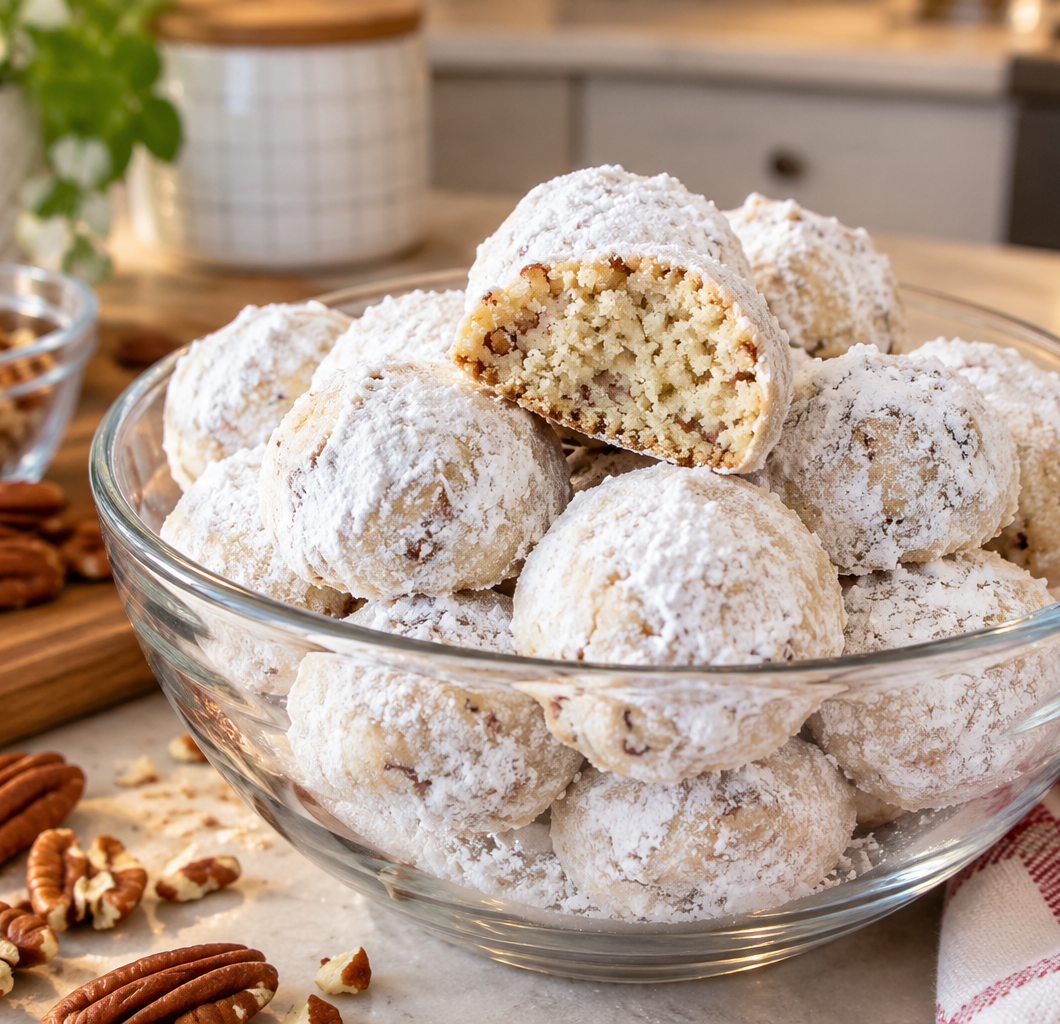
Keto Pecan Snowball Cookies
 Recipe by admin
Buttery, tender, low-carb cookies with chopped pecans and a sugar-free powdered coating.
12
servings20
minutes15
minutes171
kcal35
minutesIngredients
1/2 cup (1 stick) unsalted butter, or ghee, softened
2 cups superfine almond flour
2 tablespoons coconut flour
1/3 cup sugar-free granulated sweetener
1/2 cup raw pecans, finely chopped
1 teaspoon pure vanilla extract
1/4 teaspoon sea salt
Sugar-free confectioners’ sweetener, for rolling the cookies (amount as needed)
Directions
- Mix the dough. Add the softened butter, almond flour, coconut flour, granulated sweetener, chopped pecans, vanilla extract, and sea salt to a stand mixer. Beat on medium speed until evenly combined.
- Chill. Refrigerate the cookie dough for 2 hours to firm it up and make shaping easier.
- Shape. Roll the dough into balls approximately 1 to 1.5 inches in diameter. Arrange them on a parchment-lined baking sheet.
- Freeze briefly. Place the tray in the freezer for 15 minutes.
- Preheat the oven. Heat the oven to 350°F (177°C).
- Bake. Bake for 12 to 15 minutes, until the cookies begin turning slightly golden around the edges or bottoms.
- Cool. Leave the cookies to cool for at least 20 minutes, or until firm enough to handle.
- Coat and serve. Put sugar-free confectioners’ sweetener in a bowl and gently roll each cooled cookie in it until coated.
Notes
- Use softened butter, not melted butter.
- If the dough is too crumbly, mix in additional softened butter one tablespoon at a time. If it is too sticky, add almond flour gradually.
- Do not replace coconut flour directly with another flour.
- Chop the pecans finely for an even texture.
- Allow the cookies to cool completely before coating them in powdered sweetener.
- Store cooled cookies in an airtight container. The shaped dough can also be frozen for future baking.
Nutrition Facts
12 servings per container
- Amount Per ServingCalories171
- % Daily Value *
- Total Fat
14g
18%
- Total Carbohydrate
7g
3%
- Protein 5g 10%
* The % Daily Value tells you how much a nutrient in a serving of food contributes to a daily diet. 2,000 calories a day is used for general nutrition advice.


