A Simple Homemade Cheese Scone Recipe
There is something incredibly satisfying about baking cheese scones from scratch. They come together with everyday pantry ingredients and fill the kitchen with the rich aroma of freshly baked cheddar. I enjoy making these scones whenever I need a quick savory bake that works equally well for breakfast, lunch, or an afternoon snack. They have a soft interior, crisp golden edges, and plenty of cheesy flavor in every bite.
One of the reasons I return to this recipe so often is that it doesn’t require complicated techniques. A few simple baking tips make all the difference, and once the dough is mixed together, the oven does most of the work. The result is a batch of fluffy homemade cheese scones that are delicious served warm or enjoyed later in the day.
Why This Recipe Works
A good cheese scone should have a light crumb, flaky texture, and rich cheese flavor without becoming heavy. This recipe achieves that balance by combining baking powder and baking soda with cold butter and chilled buttermilk.
Keeping the butter cold allows tiny pieces of butter to remain throughout the dough. As the scones bake, those pieces melt and create steam, producing delicate layers inside every scone. The buttermilk helps create a tender crumb while adding a slight tang that complements the sharp cheddar beautifully.
The high oven temperature is another important step. Baking the scones in a fully preheated oven helps them rise quickly before the outside becomes firm, creating a taller and softer texture.
Ingredients You’ll Need
This recipe uses simple baking ingredients that work together to create soft and flavorful cheese scones.
For the dry mixture, I combine all-purpose flour, baking powder, baking soda, salt, and, if I want a little extra depth of flavor, mustard powder and black pepper. The sharp cheddar cheese is mixed directly into the flour so every bite has plenty of cheese.
For the wet mixture, chilled buttermilk, cold butter, and a lightly beaten egg provide moisture while helping create a tender dough.
If I want an attractive finish, I brush the tops with egg wash and sprinkle a little extra grated cheese before baking.
Preparing the Ingredients
Before starting, I preheat the oven to 220°C (425°F) and line a baking sheet with parchment paper.
I also make sure the butter and buttermilk stay cold until they are needed. This is one of the easiest ways to improve the texture of homemade scones. Cold ingredients create better layers and prevent the butter from melting into the flour before baking.
Having everything measured and ready also makes mixing the dough much easier.
Mixing the Dry Ingredients
I begin by whisking together the flour, baking powder, baking soda, and salt. When using mustard powder and black pepper, I mix them in at this stage so they are evenly distributed throughout the flour.
Next, I stir in the grated cheddar cheese. Mixing the cheese with the flour first helps prevent it from clumping together and ensures that every scone has plenty of cheesy goodness.
If I plan to sprinkle cheese over the tops later, I simply set aside a small handful before continuing.
Cutting in the Butter
The next step is one of the most important.
I add the chilled butter cubes to the flour mixture and use a pastry cutter to work them into the flour. Two knives or even my fingertips also work well as long as I move quickly.
I stop mixing once the texture resembles coarse crumbs with small pieces of butter still visible.
Those tiny butter pieces are exactly what create flaky layers during baking, so I avoid working the mixture until it becomes smooth.
Bringing the Dough Together
In another bowl, I whisk together the egg and cold buttermilk.
I make a well in the center of the flour mixture before slowly pouring in the wet ingredients.
Using a fork or spatula, I gently stir until everything starts coming together into a soft dough.
At this point, the dough looks slightly rough and feels a little sticky, which is completely normal.
I avoid overmixing because too much stirring develops gluten, making the finished scones firm instead of soft.
Shaping the Dough
Once the dough has formed, I transfer it to a lightly floured work surface.
Rather than kneading it like bread, I simply fold it together a few times until it holds its shape.
I gently pat the dough into a round or rectangle about 1½ to 2 centimeters thick.
Keeping the dough fairly thick helps the scones bake taller with a fluffy center.
Using a cookie cutter, I press straight down without twisting. Twisting seals the edges and can reduce how well the scones rise.
Any leftover dough is gathered together once and cut again without excessive handling.
Preparing for Baking
I arrange the cut scones on the prepared baking tray, leaving a little space between each one.
If I’m using the optional topping, I brush each scone with egg wash and finish with the reserved grated cheese.
The extra cheese melts beautifully in the oven and creates a delicious golden crust.
Before baking, I often leave the tray on the counter for about 10 to 15 minutes. This short rest helps relax the dough and encourages a better rise.
Baking the Scones
The baking tray goes into the fully heated oven.
The scones bake for approximately 12 to 15 minutes until the tops become beautifully golden and the centers feel firm.
During the first part of baking, I avoid opening the oven door because sudden heat loss can affect the rise.
As they bake, the butter creates steam, the cheese melts into the dough, and the leavening agents produce a wonderfully light interior.
The finished scones have crisp golden tops, flaky edges, and soft centers packed with cheddar flavor.
Cooling Before Serving
Once baked, I remove the tray from the oven and carefully transfer the scones onto a wire rack.
Although it is tempting to serve them immediately, allowing them to cool for about 5 to 10 minutes helps the inside finish setting while remaining soft and tender.
This short cooling time also makes slicing them much easier.
Serving Ideas
Freshly baked cheese scones are incredibly versatile.
I often serve them warm with butter for a simple snack.
They also pair wonderfully with a bowl of soup, fresh salad, scrambled eggs, or roasted vegetables.
For brunch, they make an excellent savory alternative to sweet pastries.
They’re equally enjoyable with afternoon tea or packed into a lunchbox for later in the day.
Storage Tips
If there are leftovers, I store them in an airtight container at room temperature for up to two days.
For longer storage, I freeze the cooled scones in a freezer-safe container for up to three months.
When ready to enjoy them again, I reheat the scones in a 160°C (320°F) oven for about 5 to 7 minutes until warmed through and lightly crisp.
Helpful Baking Tips
Using cold butter and chilled buttermilk is one of the simplest ways to create flaky layers.
Mix the dough only until combined. Overworking the dough creates dense scones.
Press the cutter straight down instead of twisting.
Bake in a fully preheated oven for the best rise.
Allow the baked scones to cool briefly before serving for the best texture.
Frequently Asked Questions
Why did my scones turn out dense?
This usually happens if the dough is mixed too much or if the butter becomes warm before baking. Keeping everything cold and handling the dough gently helps produce lighter scones.
Can I use another cheese?
Yes. Mozzarella, Gruyère, Parmesan, Red Leicester, or a combination of cheeses all work well while keeping the same method.
What if I don’t have buttermilk?
You can make a substitute by mixing ¾ cup milk with 2 teaspoons lemon juice or vinegar and letting it stand for about five minutes before using.
Can I add other ingredients?
Chopped chives, spring onions, cooked bacon, herbs, roasted garlic, or sun-dried tomatoes can all be mixed into the dough if desired.
Can the dough be prepared ahead?
Yes. The prepared dough can be refrigerated for up to 24 hours before baking.
How can I tell when the scones are ready?
They should be golden brown on top, firm when lightly touched, and a toothpick inserted into the center should come out clean.
Final Thoughts
These homemade cheese scones are one of those dependable recipes that never disappoint. The combination of sharp cheddar, buttery layers, and tender crumb creates a savory bake that fits almost any occasion. With simple ingredients, gentle mixing, and a hot oven, it’s easy to achieve beautifully risen scones with plenty of flavor. Whether served fresh alongside soup, enjoyed with butter for breakfast, or saved for a quick snack later, this recipe is one I enjoy making again and again.
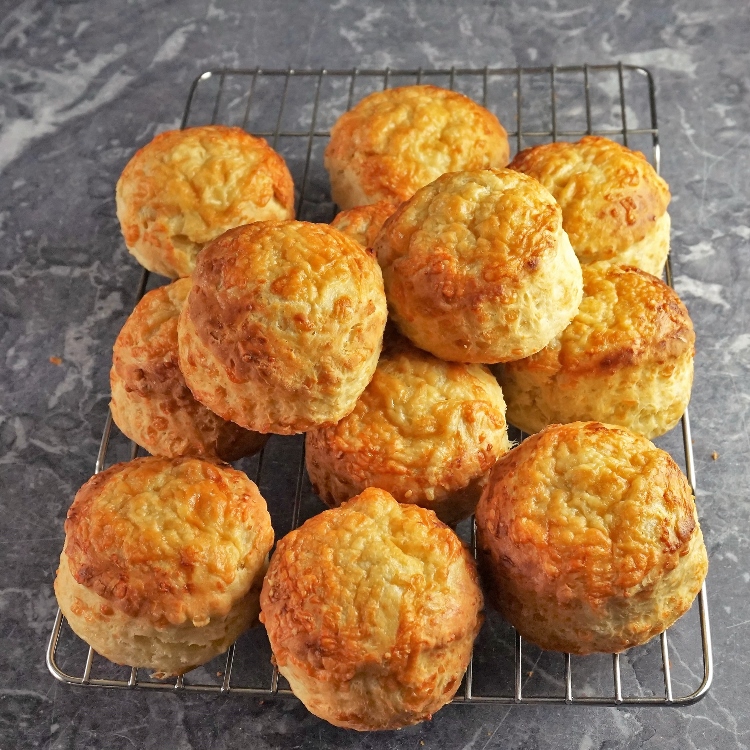
Cheese Scones
Soft, fluffy, and cheesy homemade scones made with sharp cheddar, cold butter, and buttermilk. Perfect for breakfast, brunch, afternoon tea, or serving alongside soup.
10
servings20
minutes35
minutes300
kcalIngredients
2½ cups (315 g) all-purpose flour
1 tablespoon baking powder
½ teaspoon baking soda
1 teaspoon salt
1 teaspoon mustard powder (optional)
¼ teaspoon black pepper (optional)
1½ cups (150 g) grated sharp cheddar cheese
¾ cup (180 ml) cold buttermilk
3 tablespoons unsalted butter, chilled and cubed
1 large egg, lightly beaten
Extra grated cheese
Egg wash (1 egg beaten with 1 teaspoon water)
Directions
- Preheat the oven to 220°C (425°F) and line a baking sheet with parchment paper.
- In a large bowl, whisk together the flour, baking powder, baking soda, salt, mustard powder, and black pepper if using.
- Stir in the grated cheddar cheese, reserving a small amount for topping if desired.
- Cut the chilled butter into the flour mixture until it resembles coarse crumbs.
- In a separate bowl, whisk together the egg and cold buttermilk.
- Pour the wet ingredients into the dry ingredients and gently mix until a soft dough forms.
- Transfer the dough to a lightly floured surface and knead gently three or four times.
- Pat the dough to a thickness of 1½–2 cm.
- Cut out rounds with a cookie cutter or slice into squares or wedges.
- Arrange the scones on the prepared baking sheet.
- Brush with egg wash and sprinkle with reserved cheese if using.
- Let the shaped scones rest for 10–15 minutes if desired.
- Bake for 12–15 minutes until golden brown and cooked through.
- Transfer to a wire rack and cool for 5–10 minutes before serving.
Notes
- Keep the butter and buttermilk cold for the flakiest texture.
Avoid overmixing the dough to keep the scones light.
Press the cutter straight down without twisting.
Store leftovers in an airtight container at room temperature for up to 2 days.
Freeze for up to 3 months and reheat in a 160°C (320°F) oven for 5–7 minutes.


